RAMS template
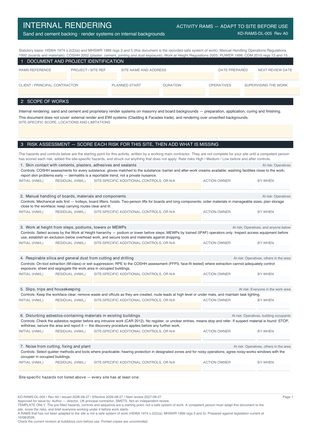
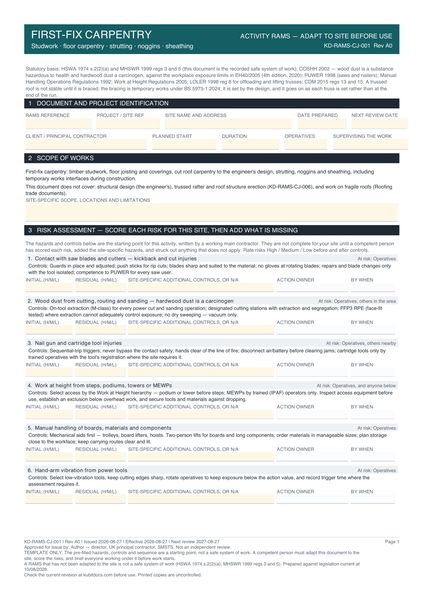
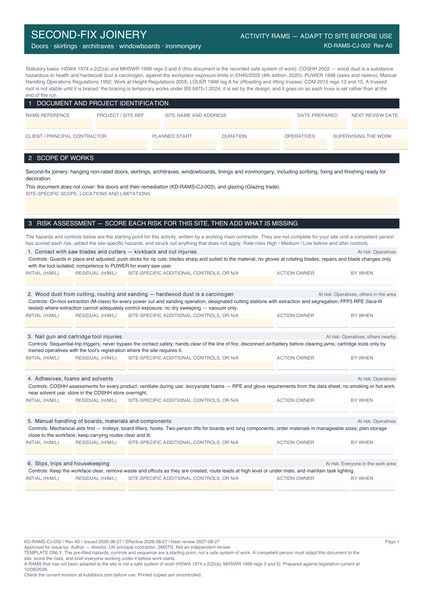
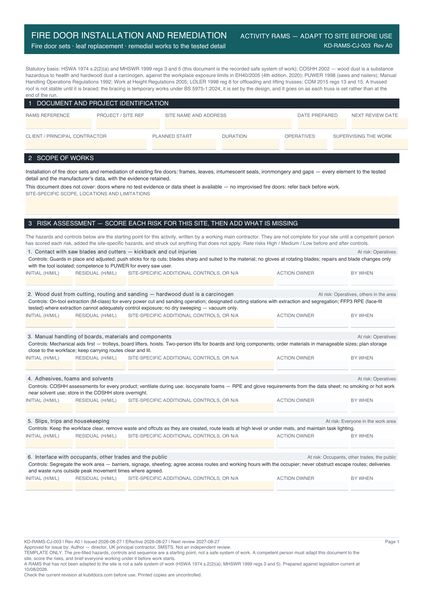
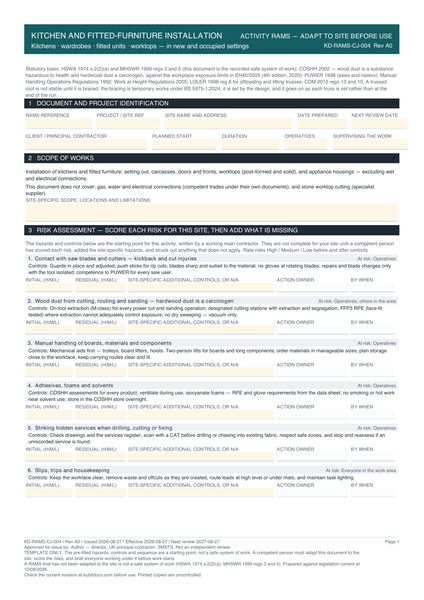
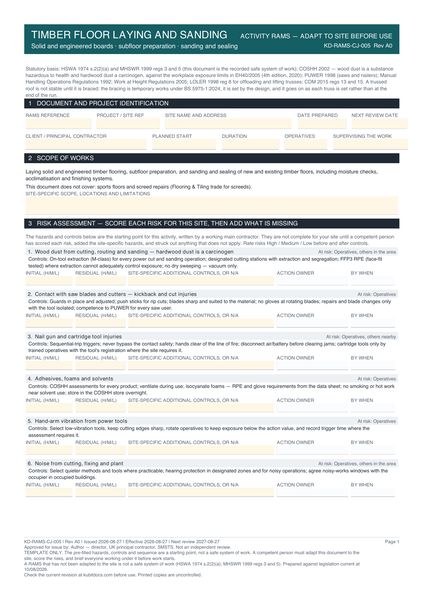
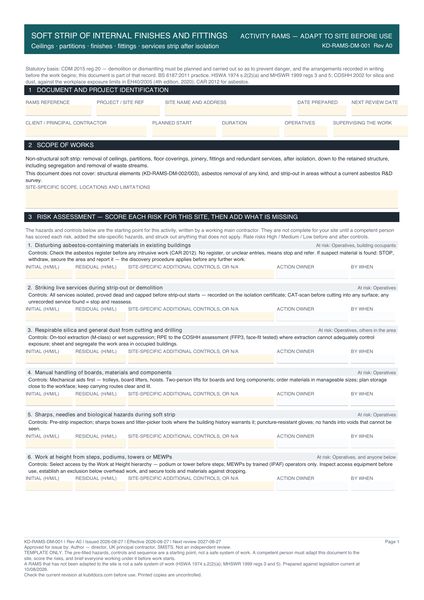
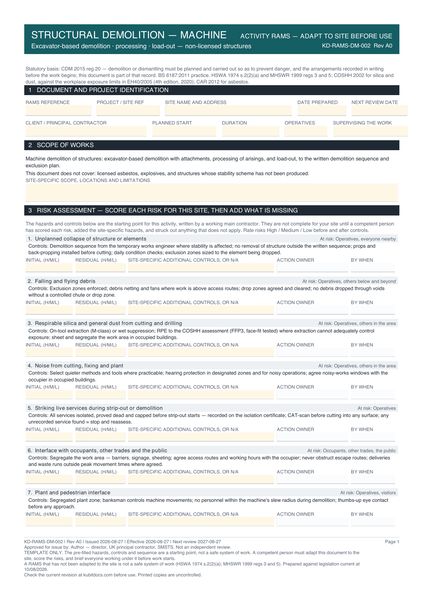
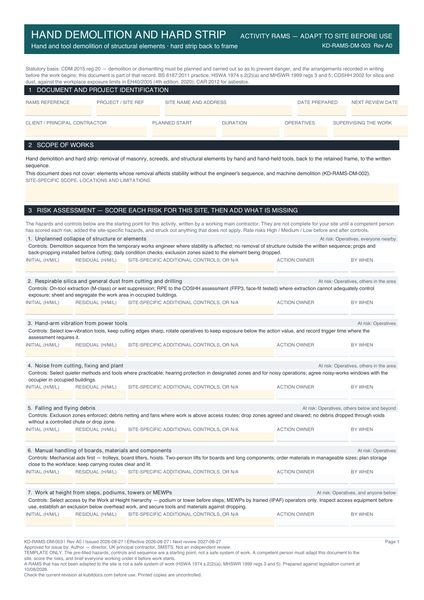
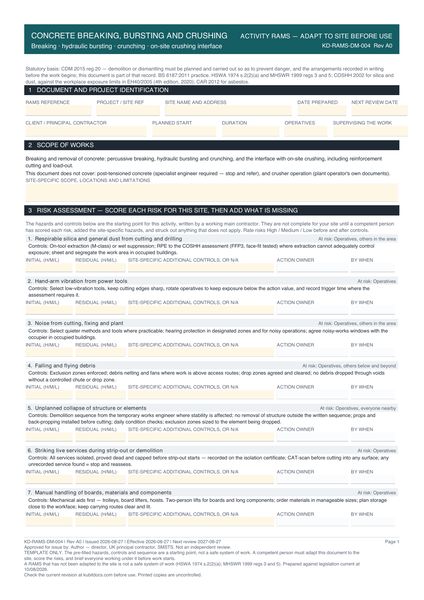
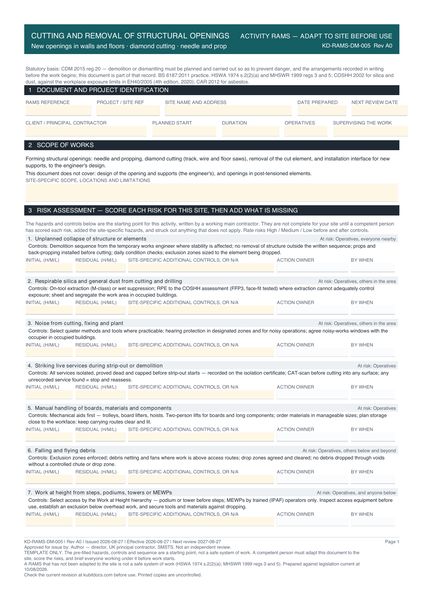
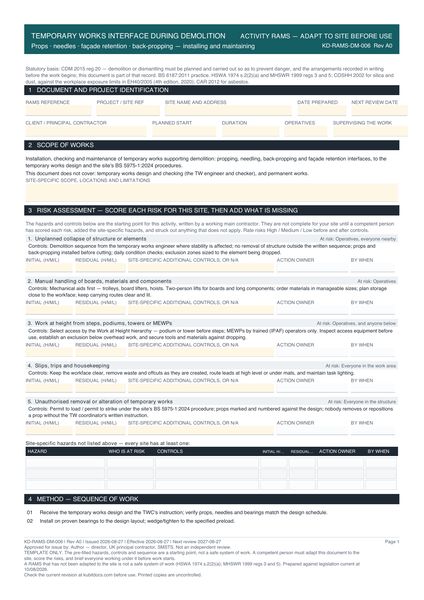
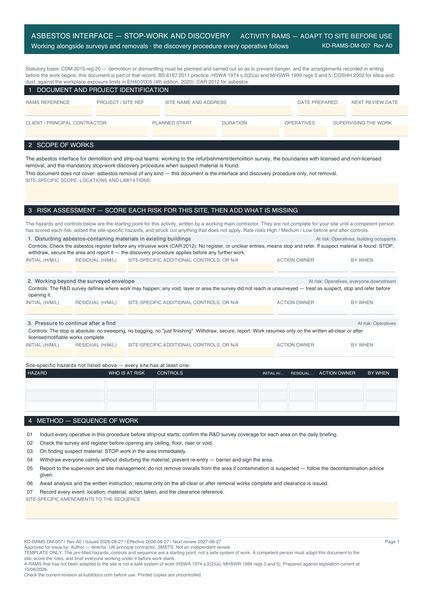
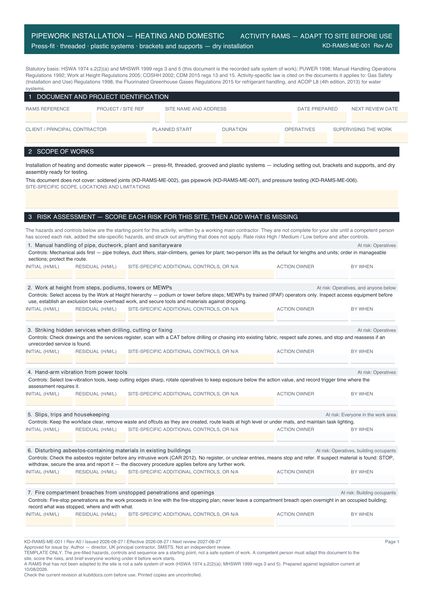
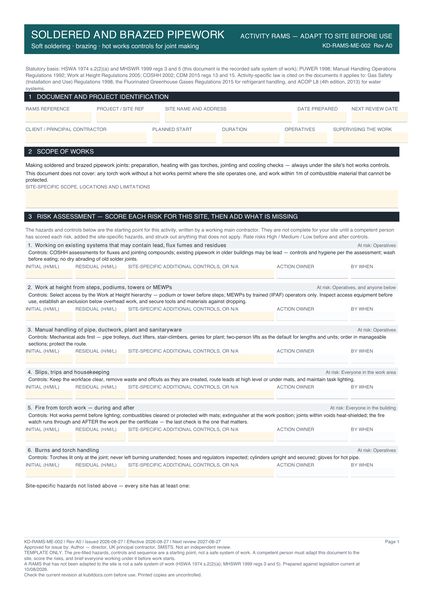
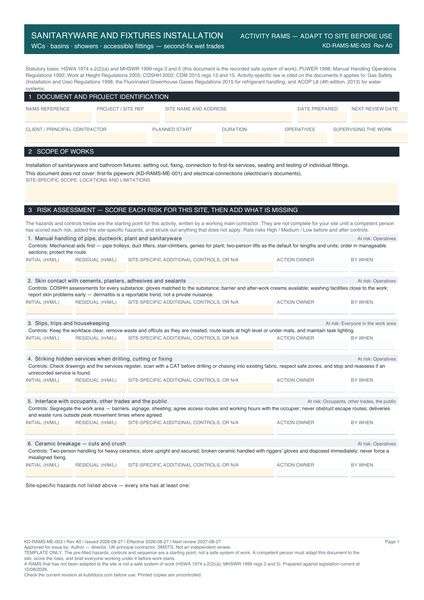
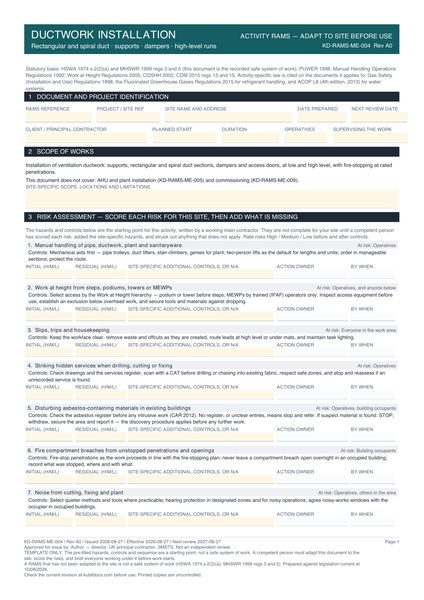
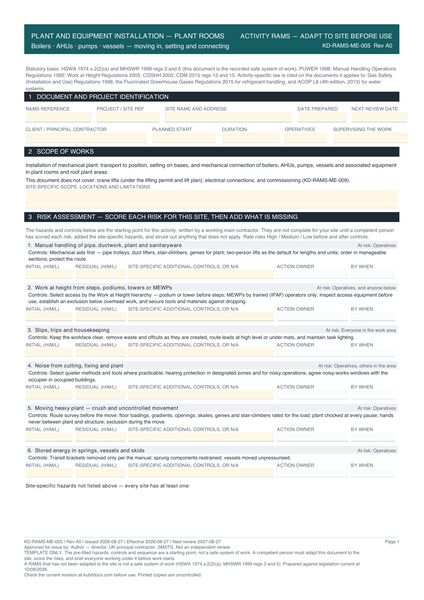
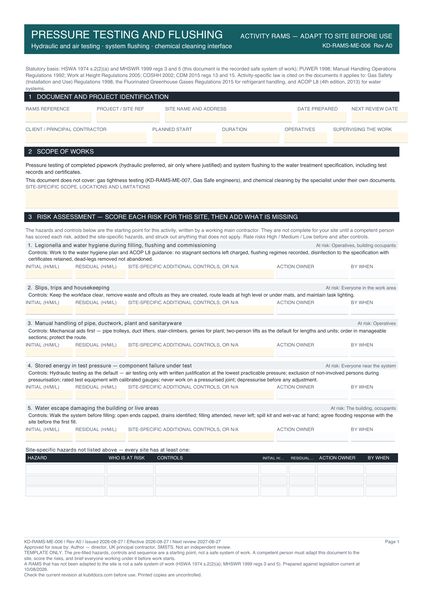
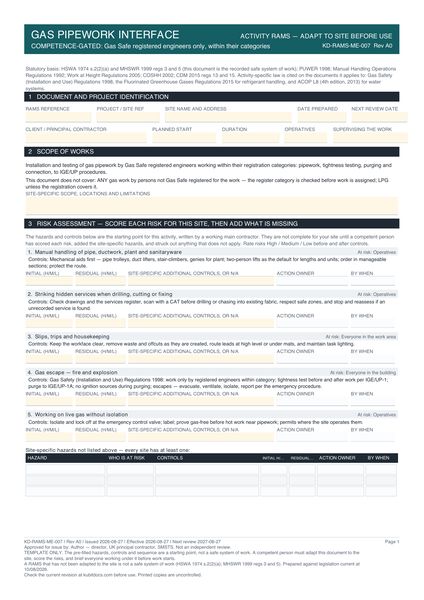
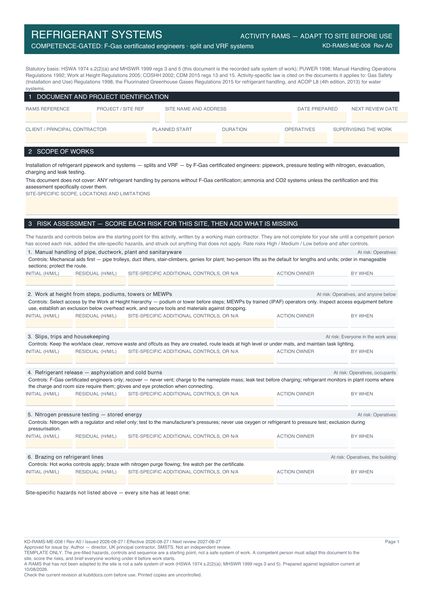
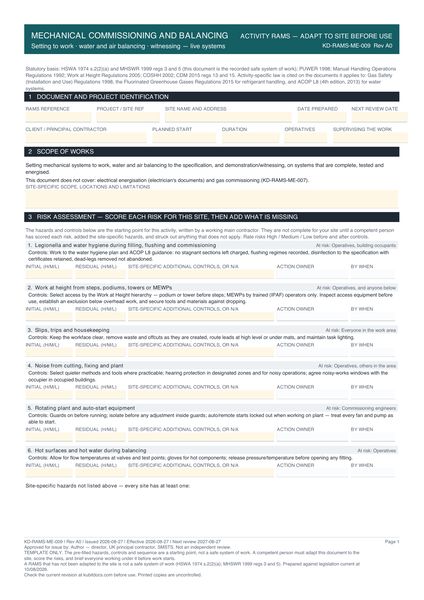
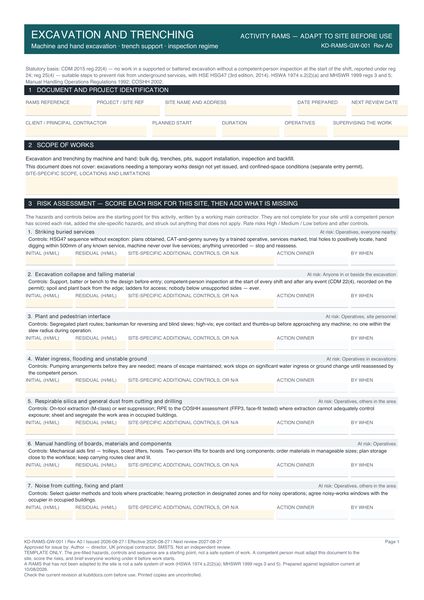
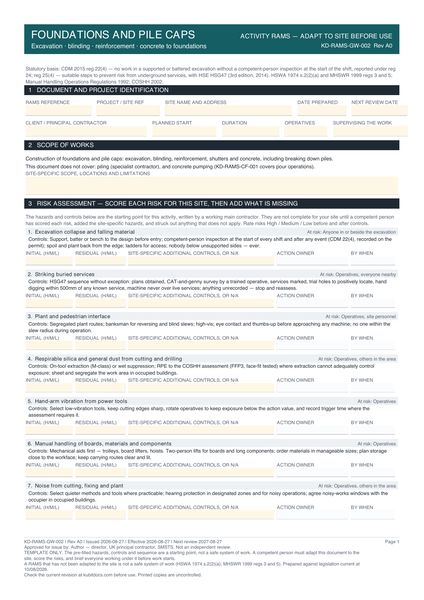
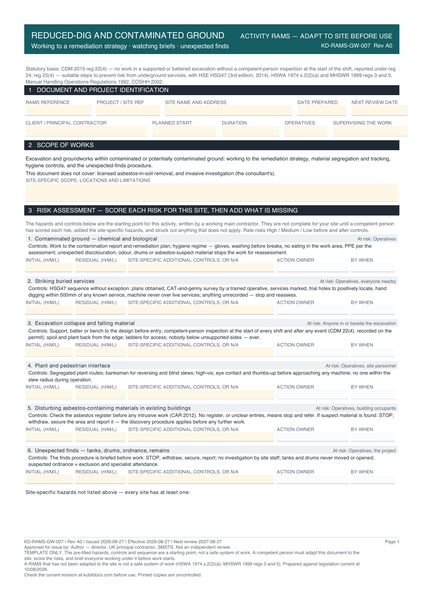
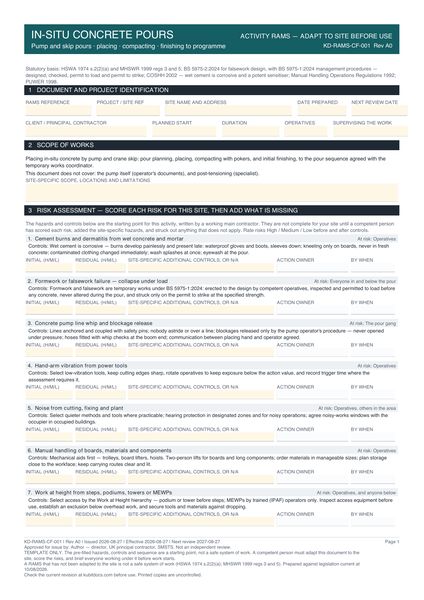
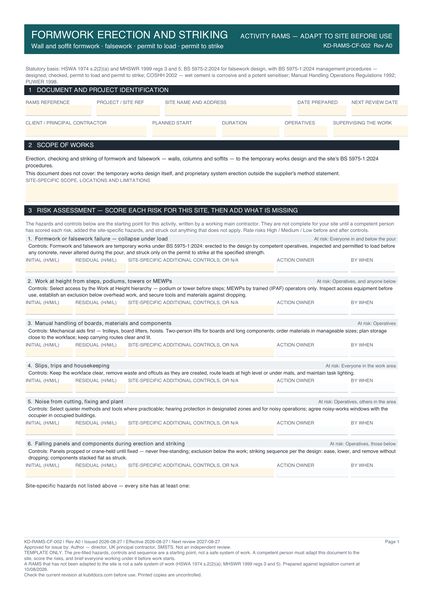
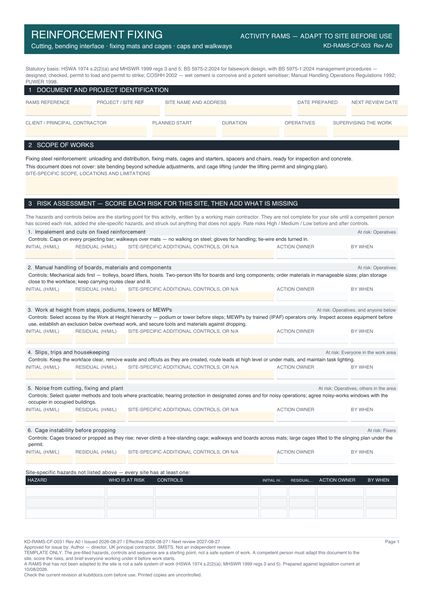
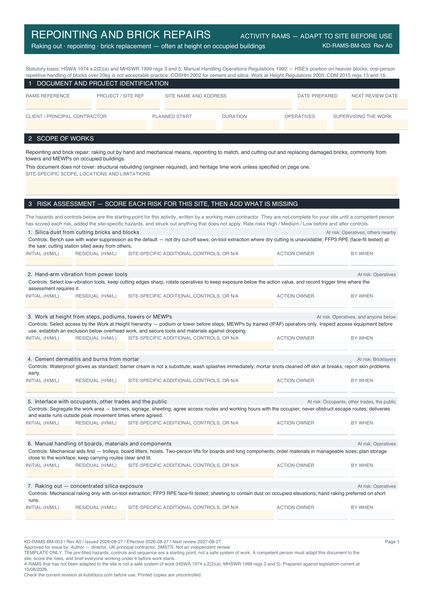
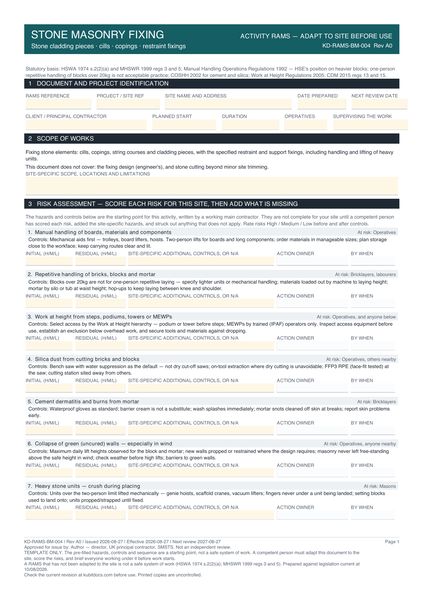
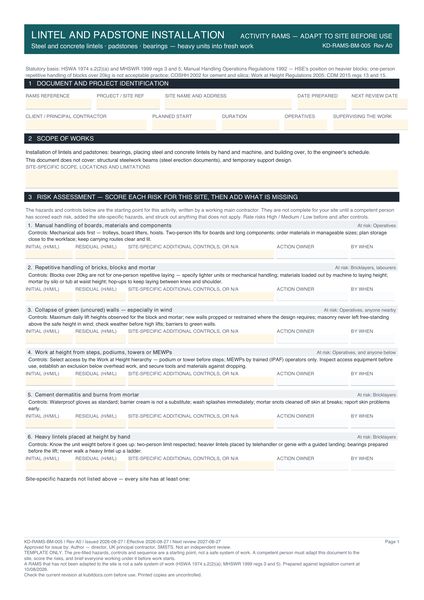
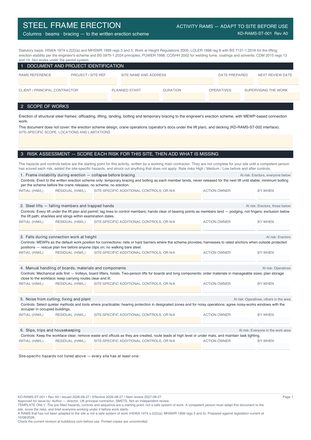
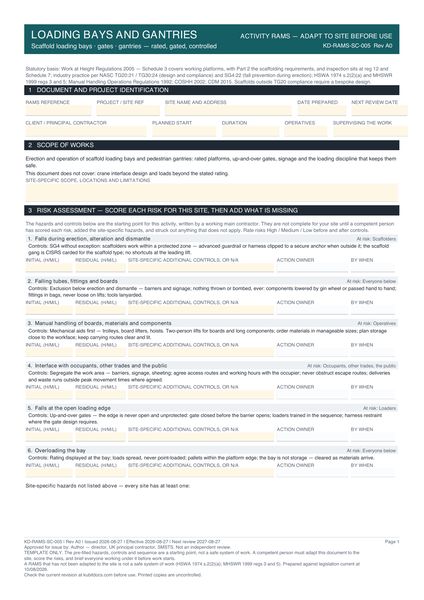
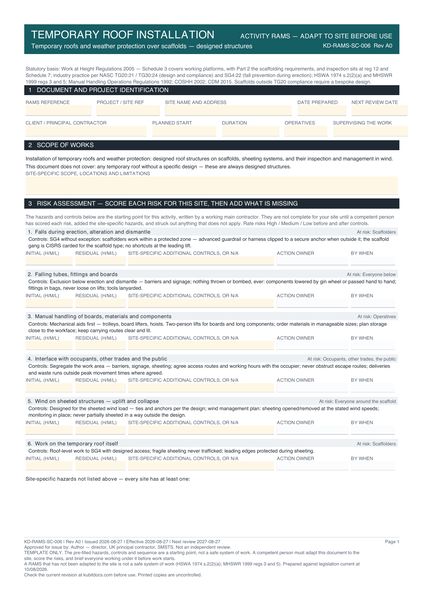
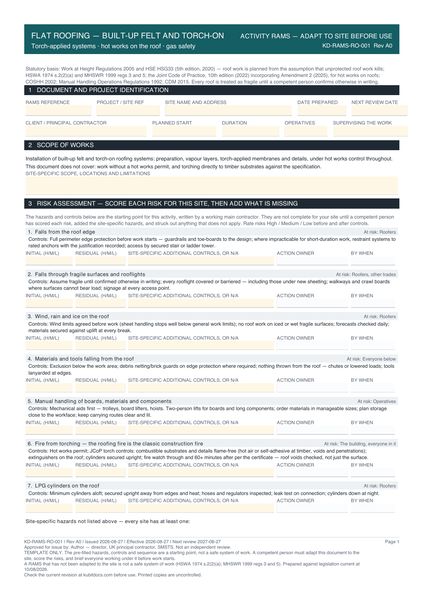
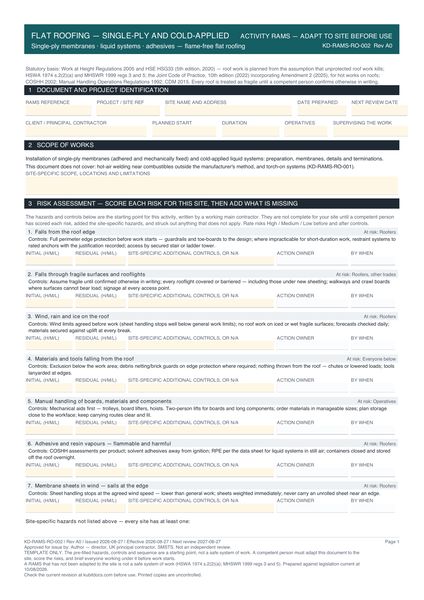
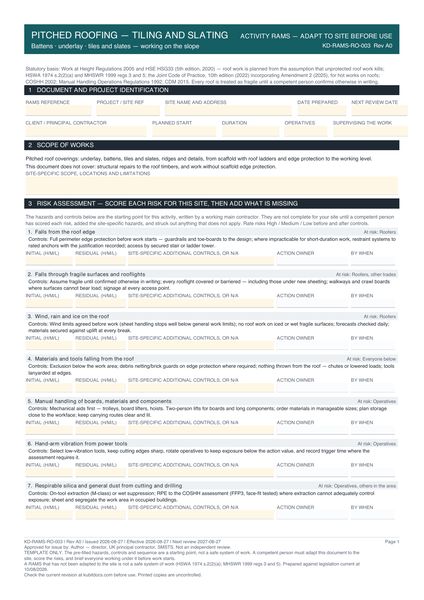
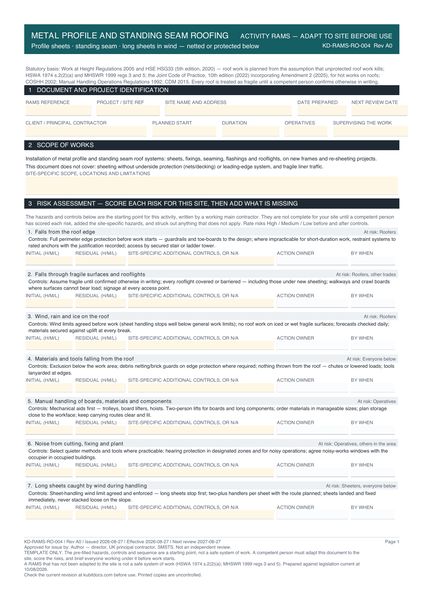
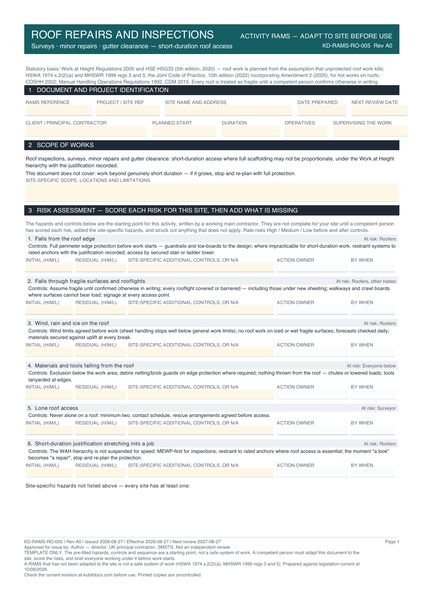
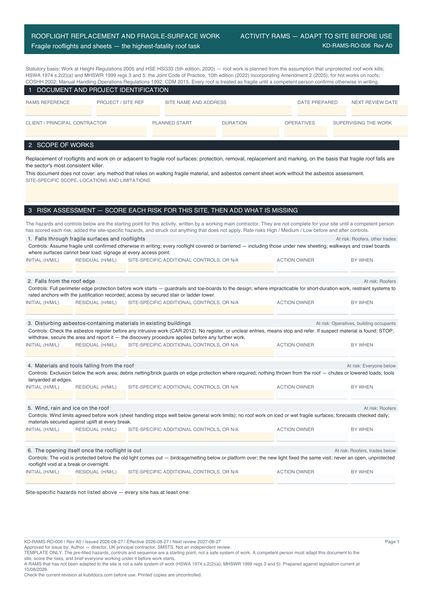
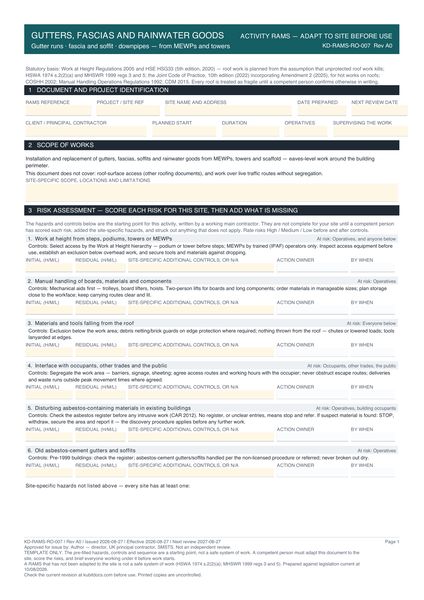
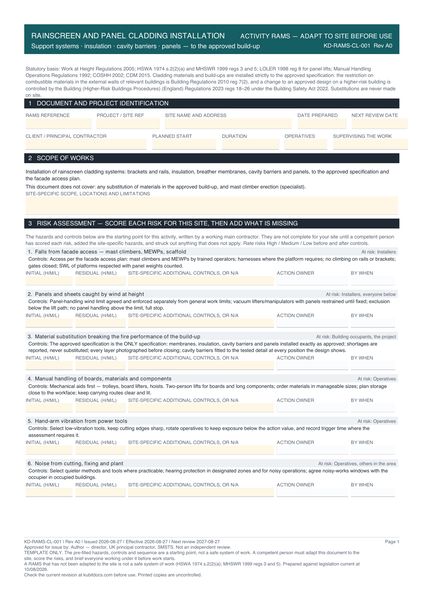
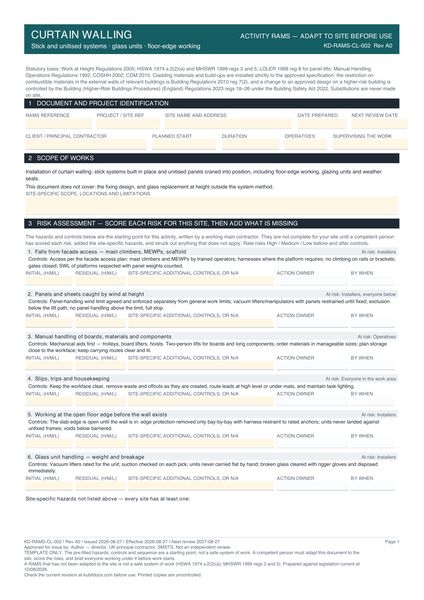
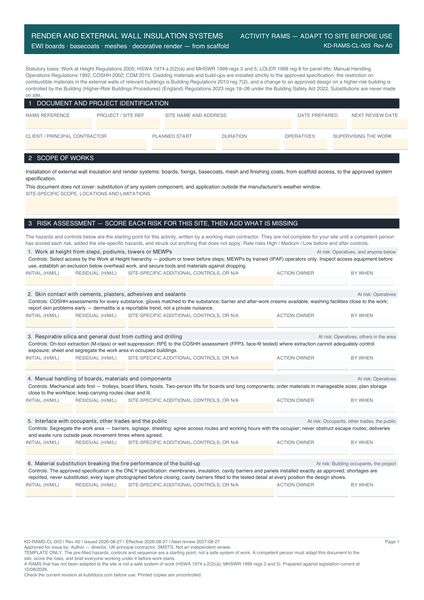
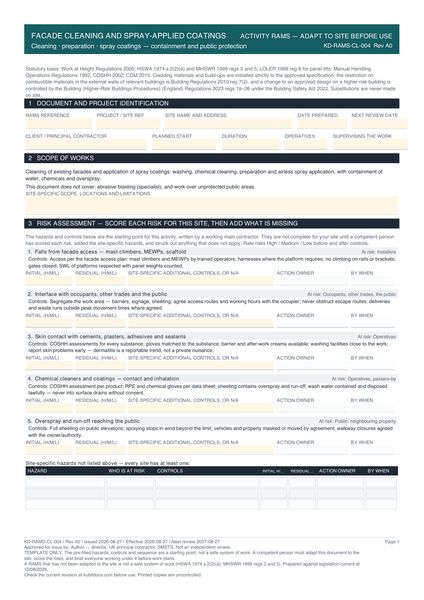
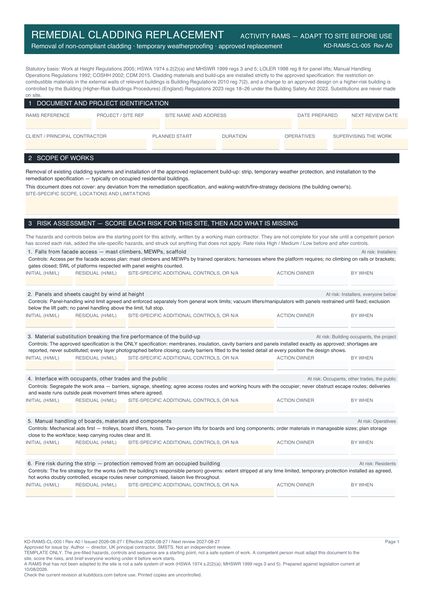
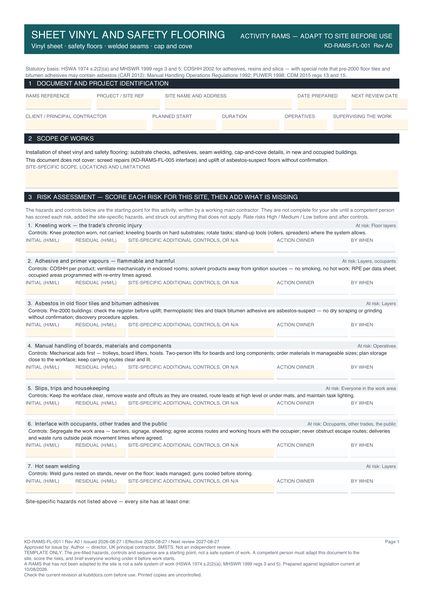
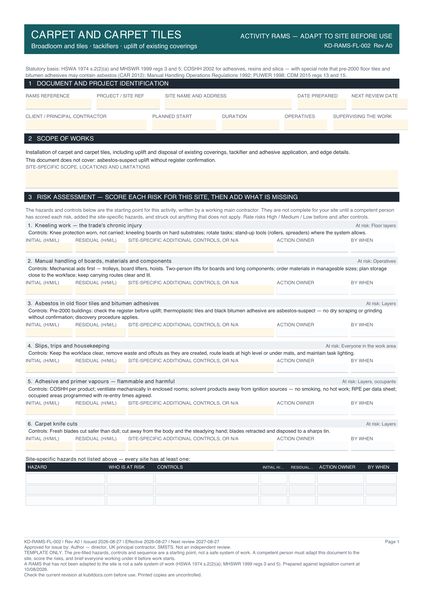
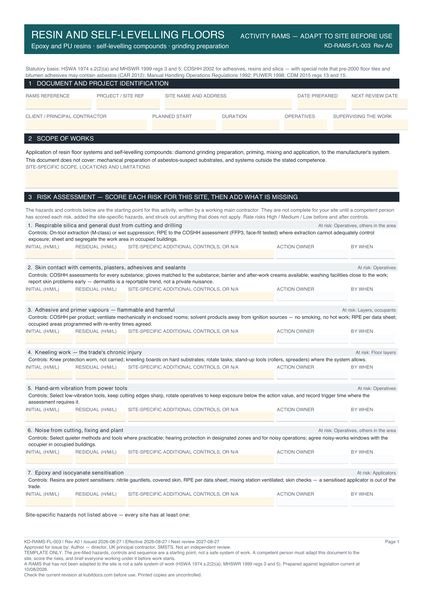
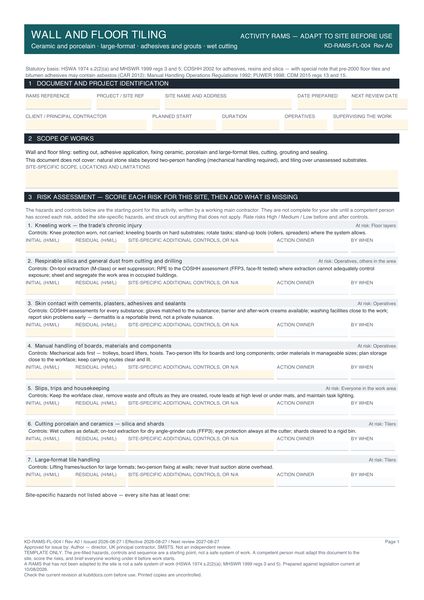
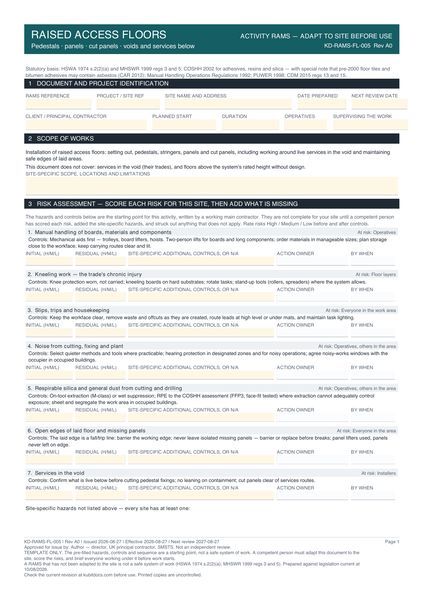
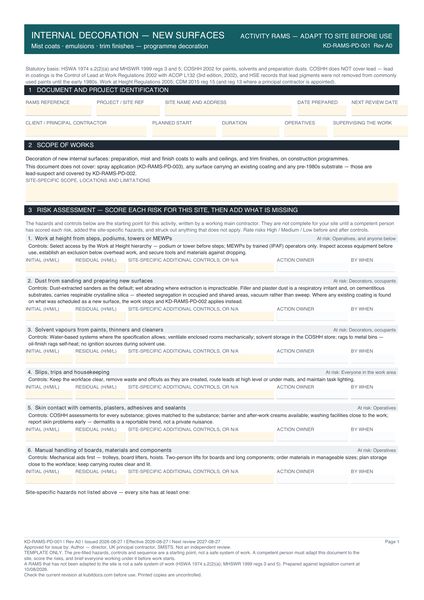
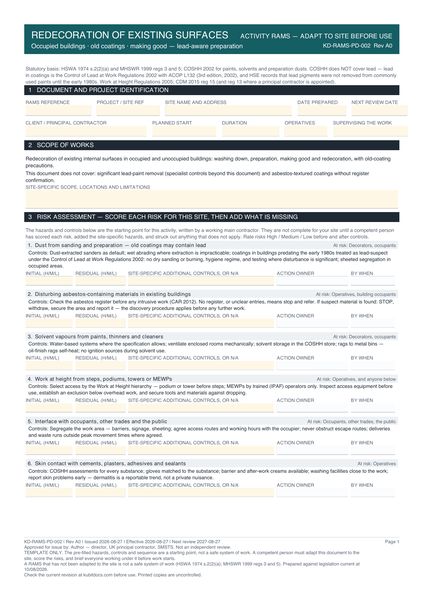
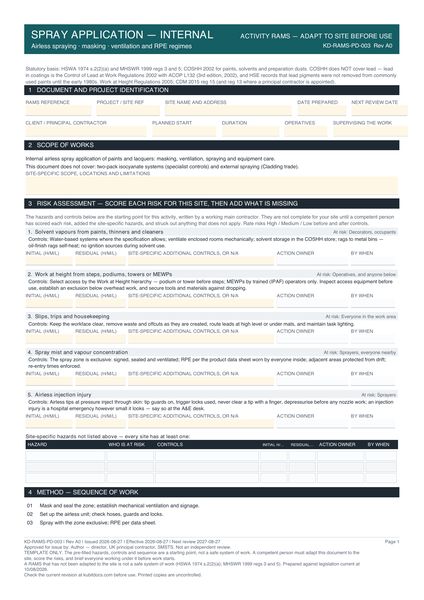
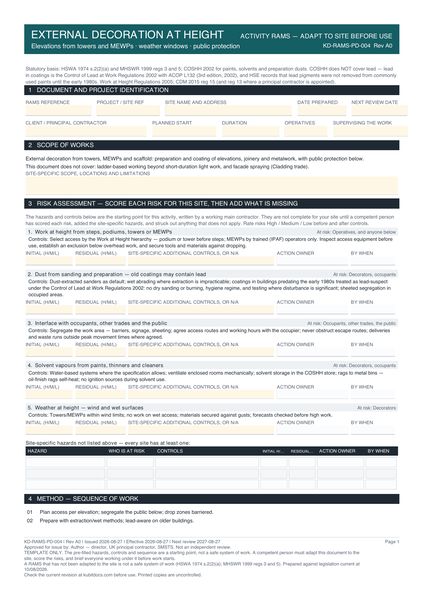
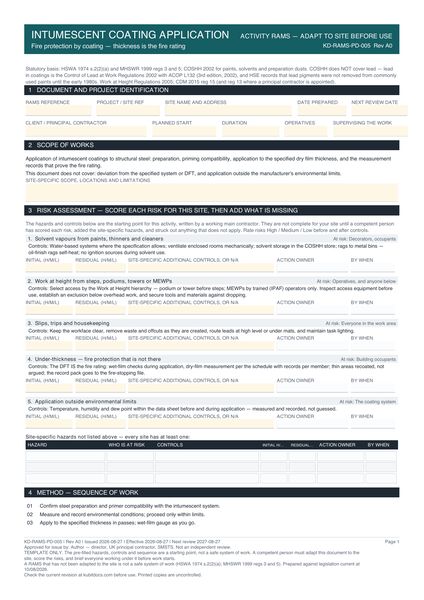
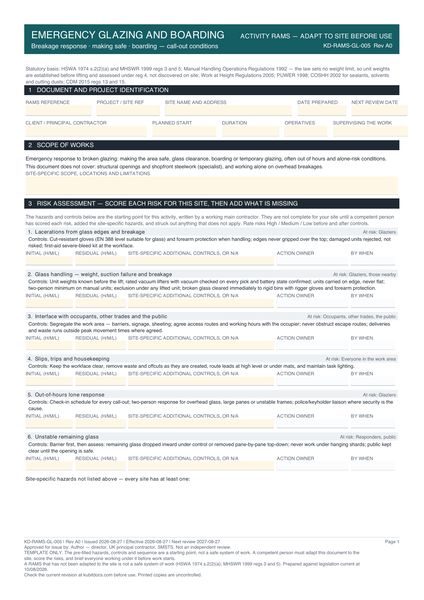
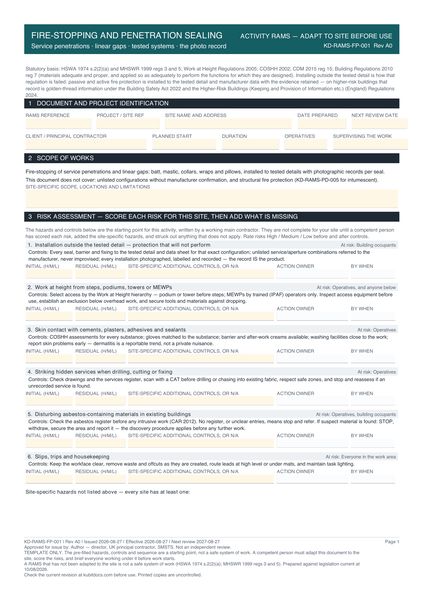
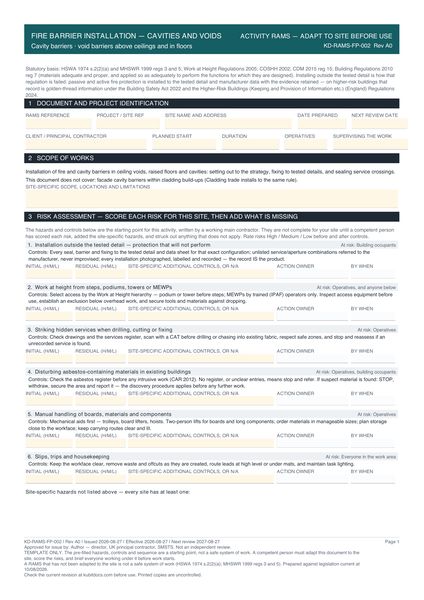
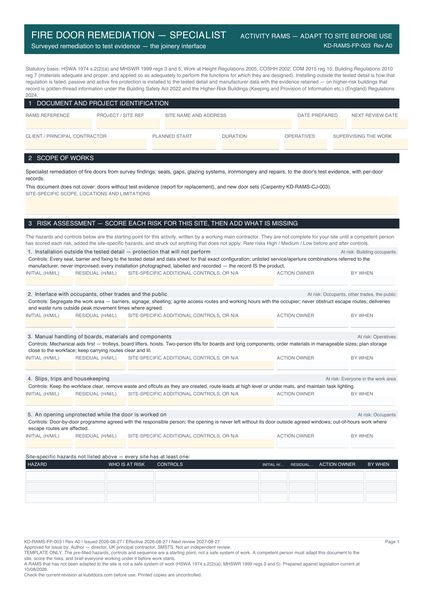
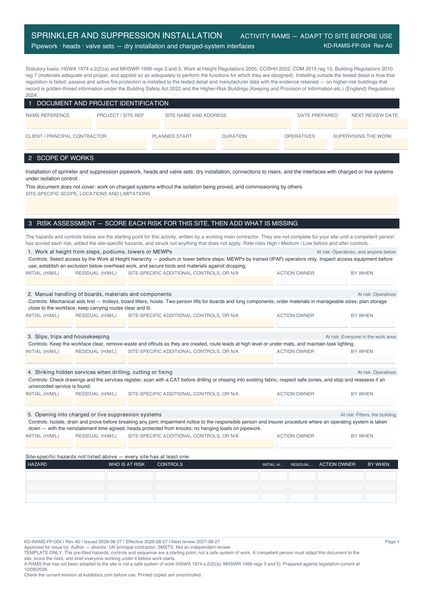
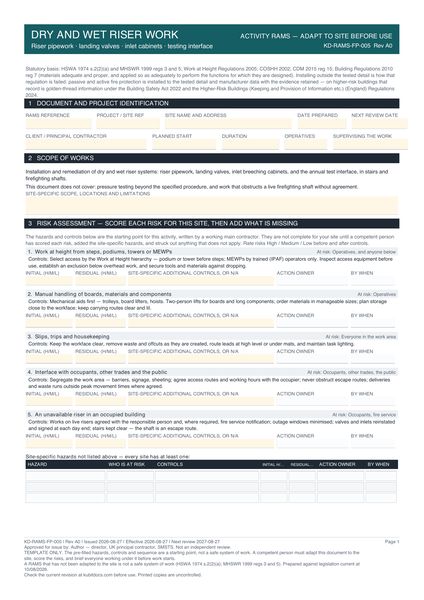
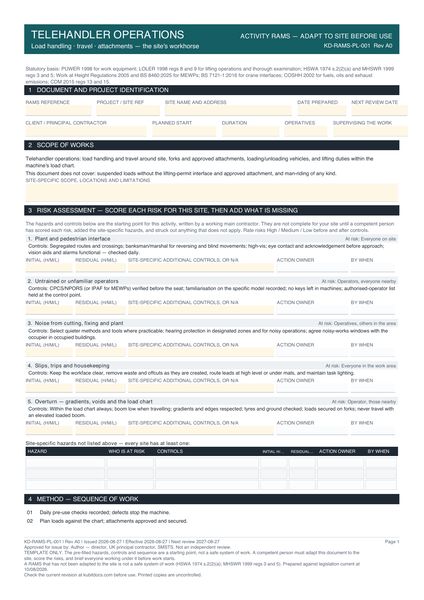
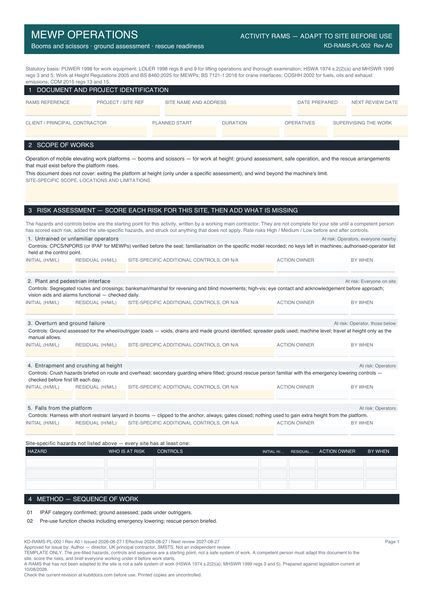
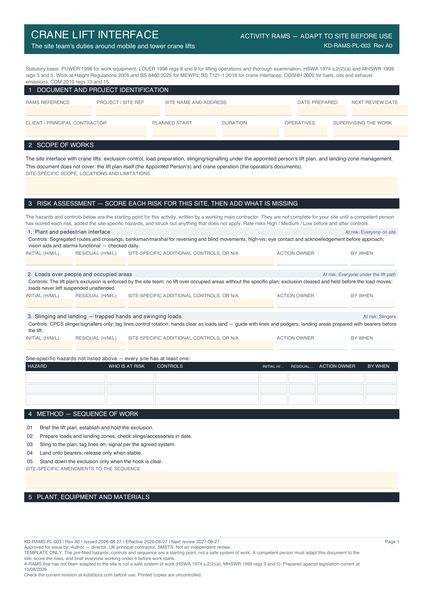
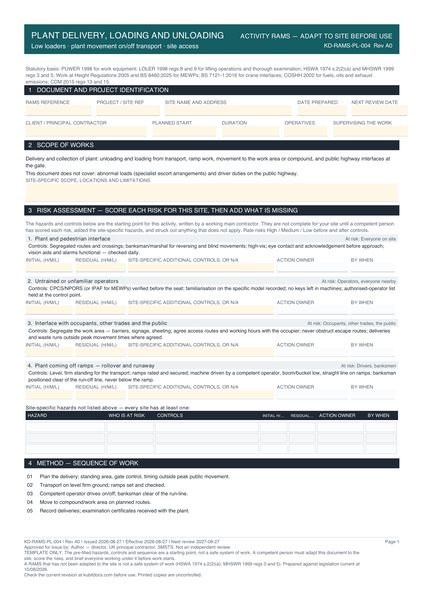
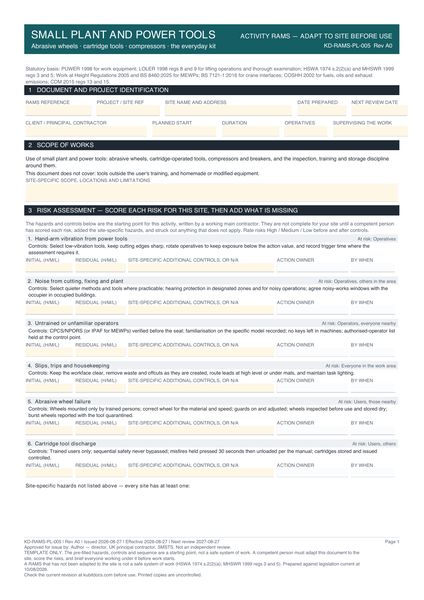
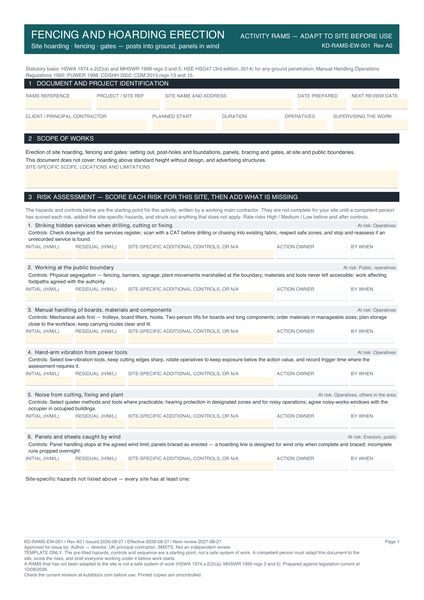
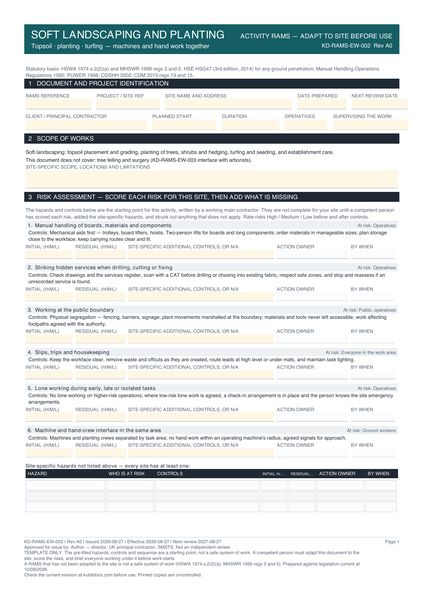
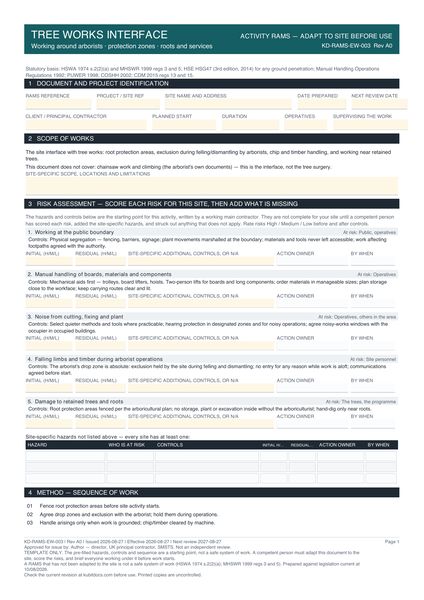
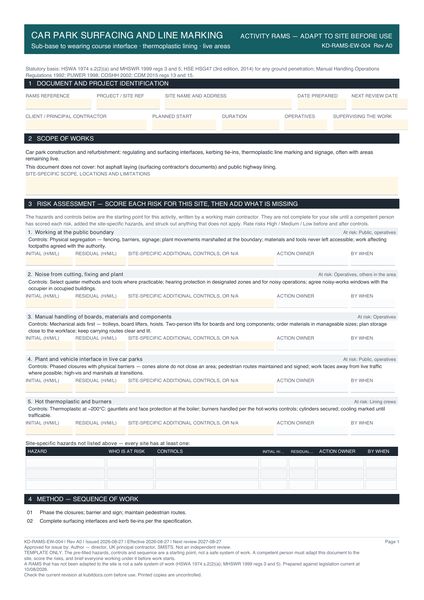
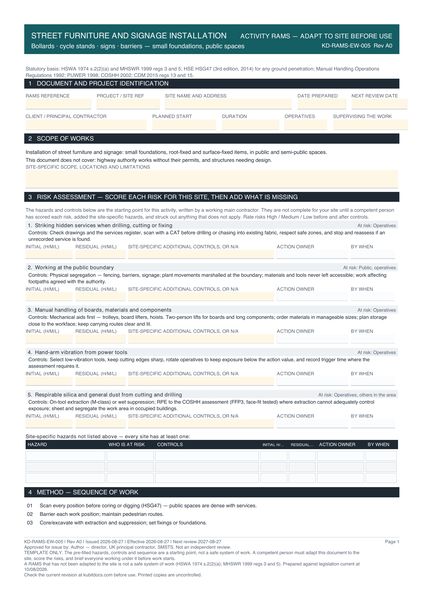
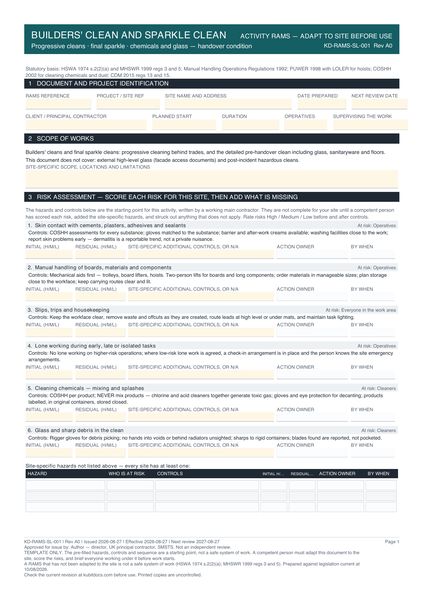
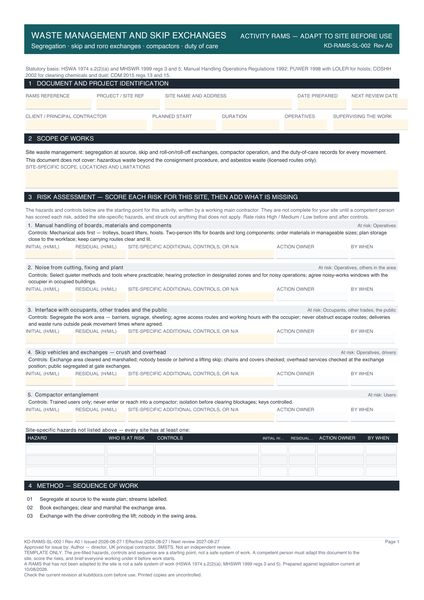
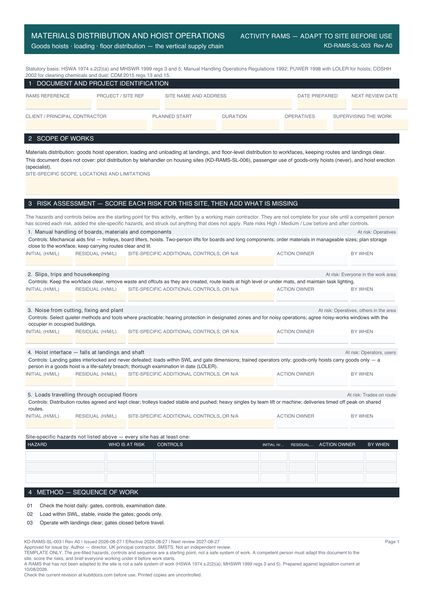
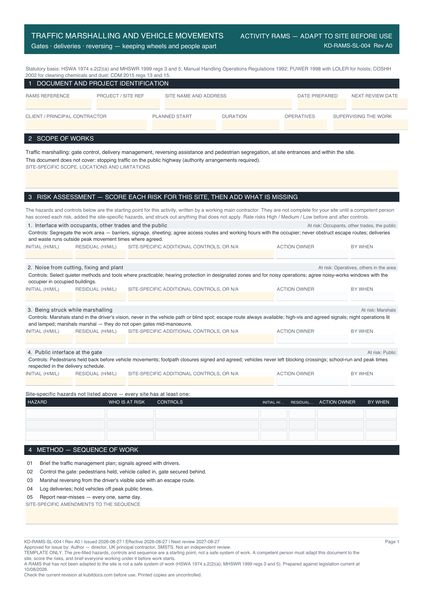
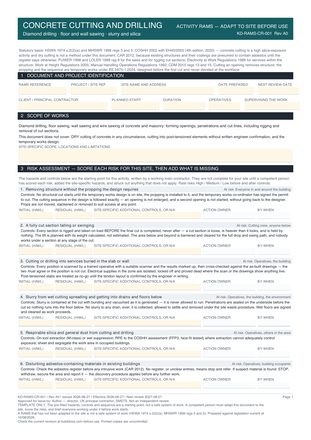
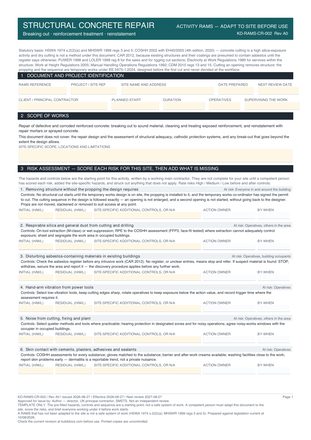
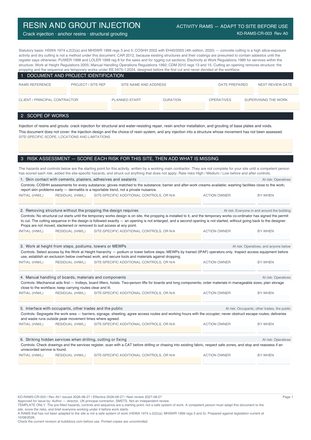
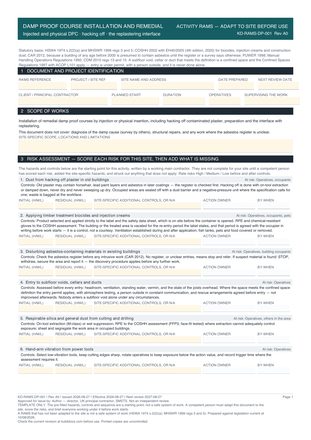
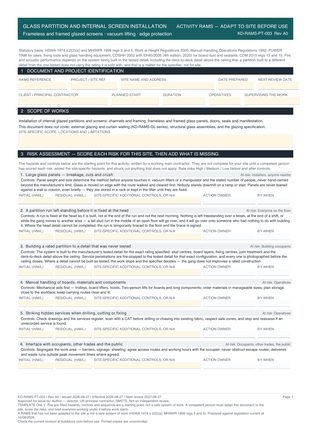
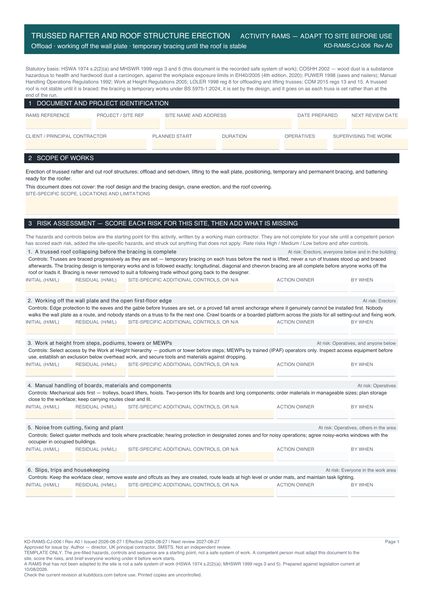
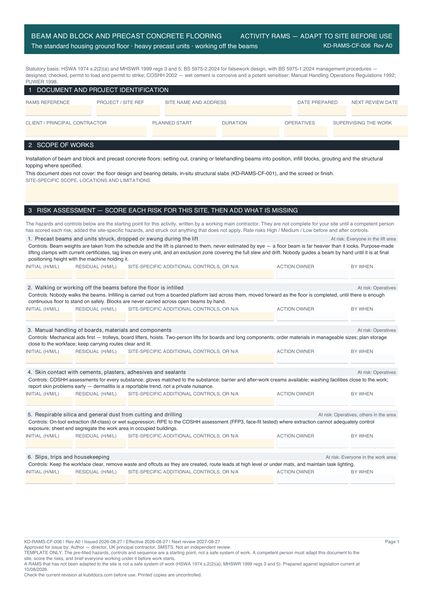
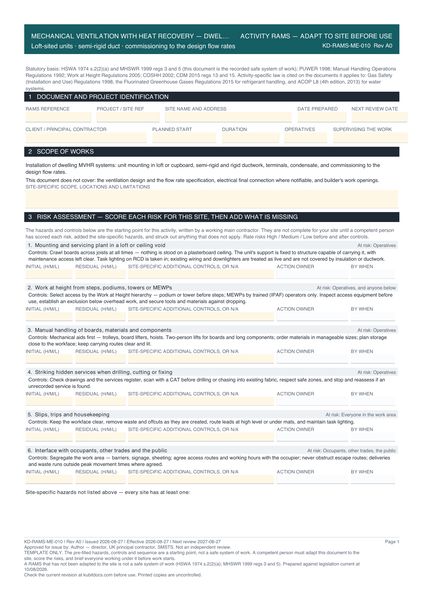
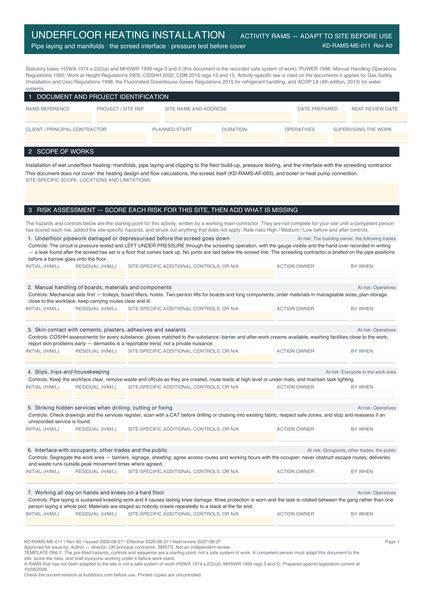
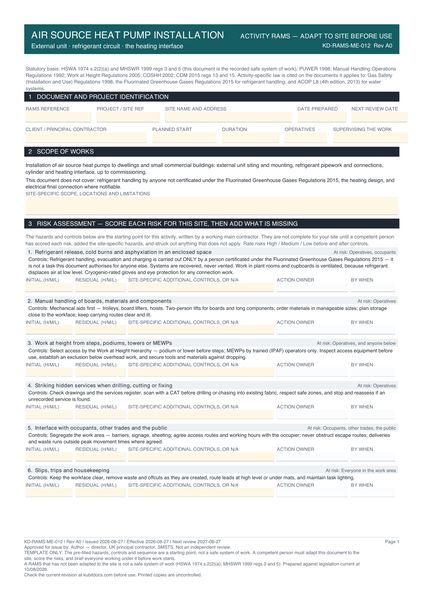
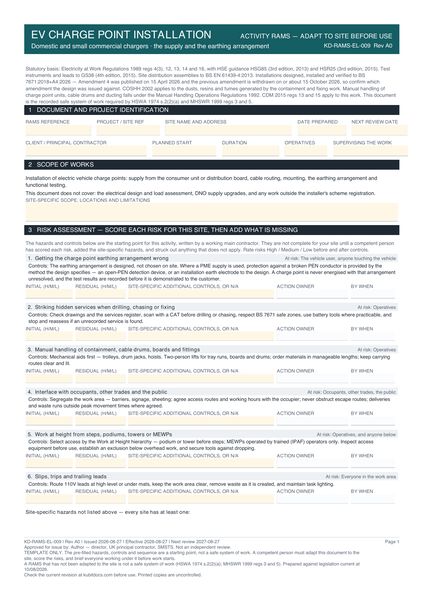
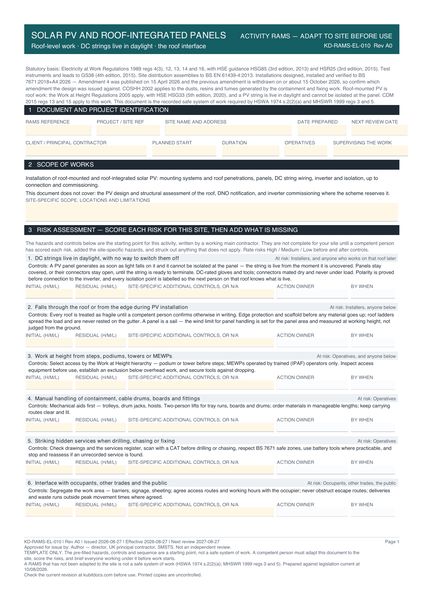
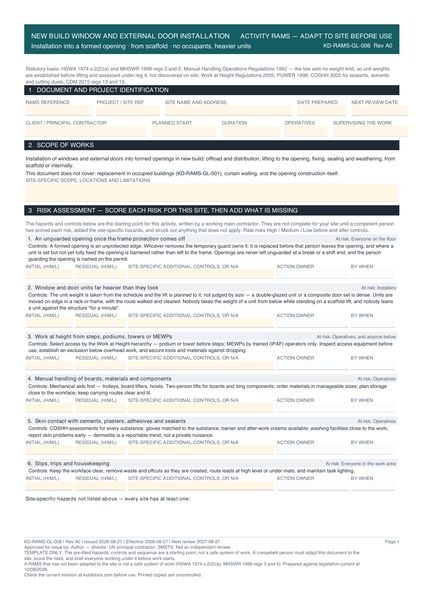
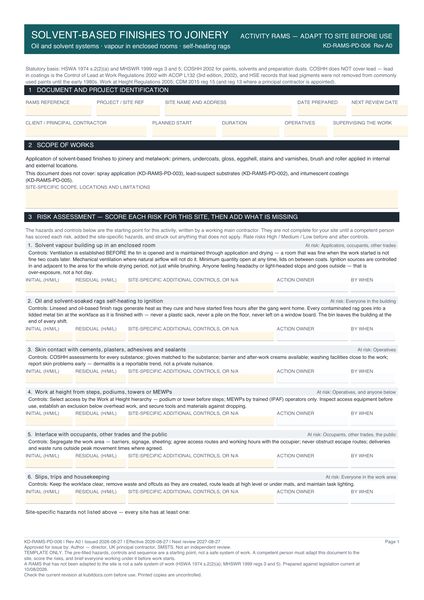
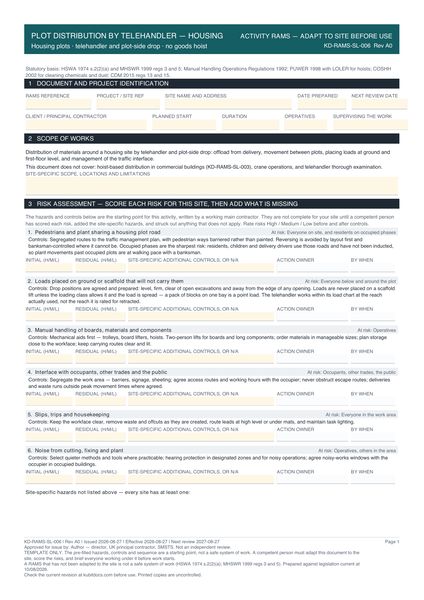
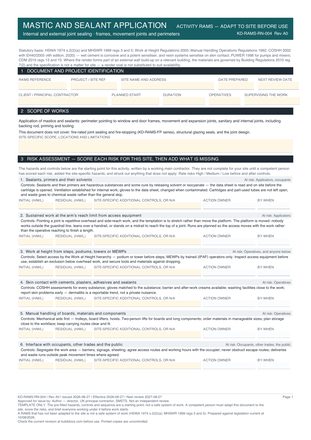
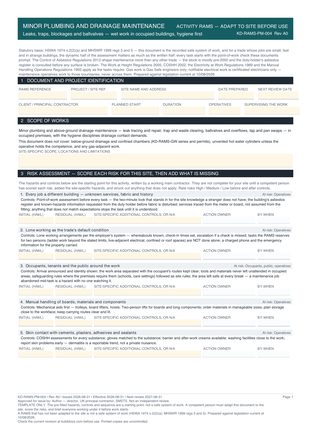
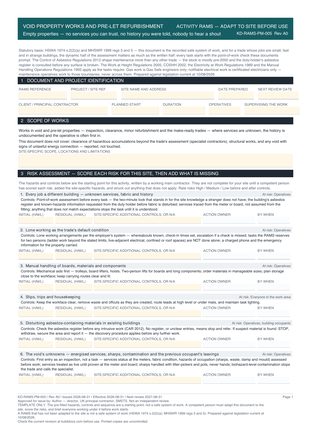
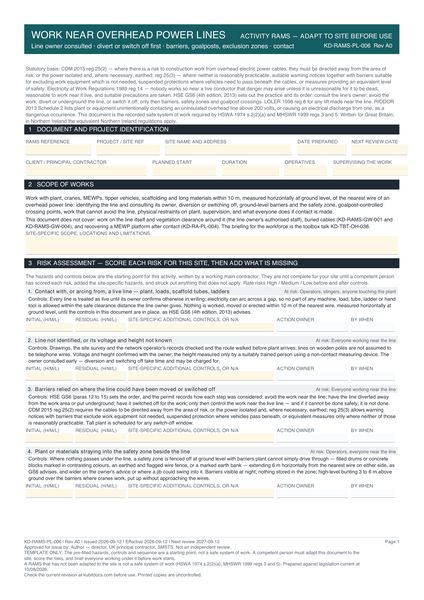
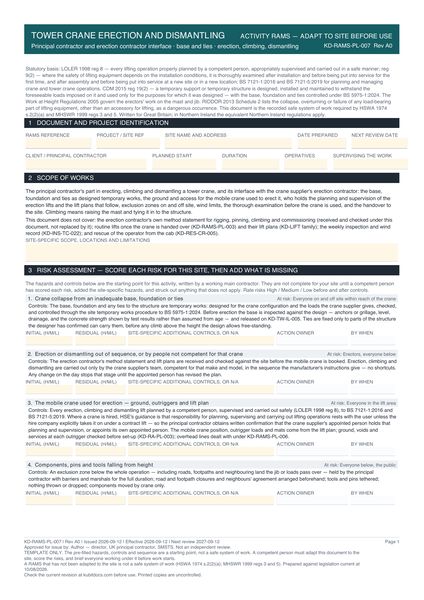
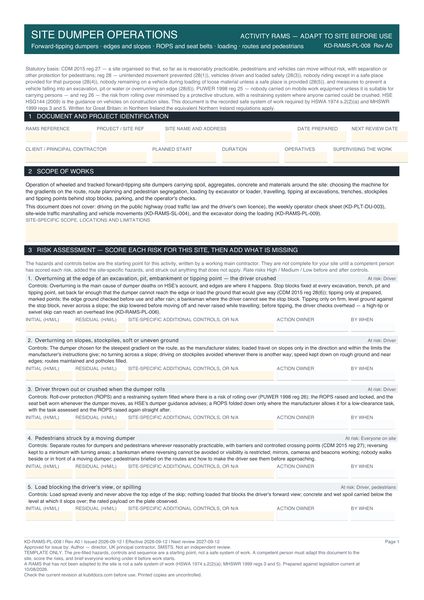
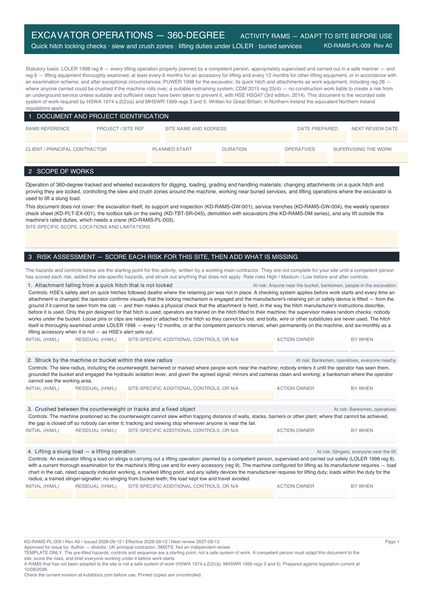
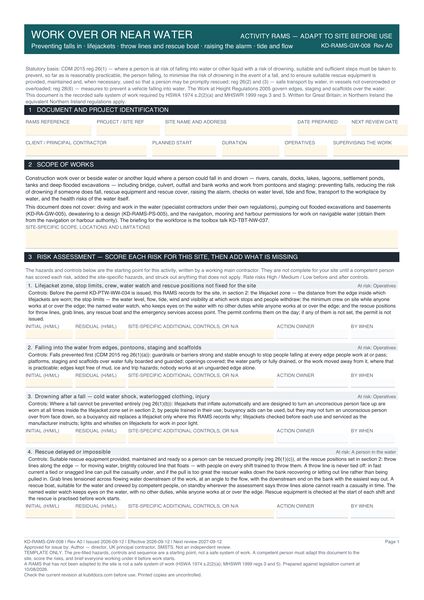
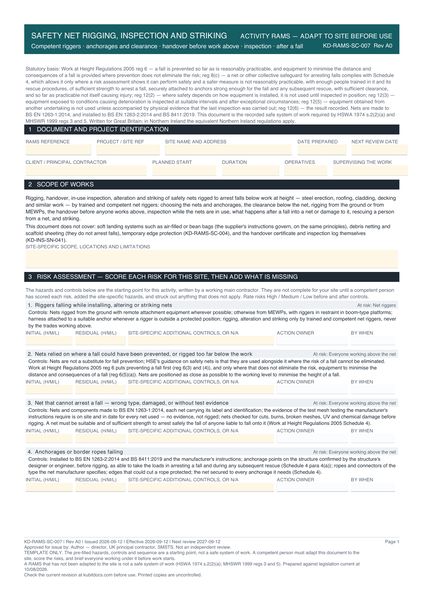
RAMS — the risk assessment and method statement together — is what a main contractor asks for before you start. A single generic RAMS template often is not what gets accepted, because it describes a trade rather than the work on that site. The range is built the other way round: one RAMS per activity, across the trades, each with the hazards, the controls, the sequence and the sign-off for that piece of work. The trade pages narrow it down; this page is the whole set.
220 documents, one price each. Helmet colours vary from site to site. This is a common convention, not a legal standard.
Written for this
220 RAMS — one per activity, across the trades.
Pick the activities you are actually doing. For a small job with no written RAMS, the combined blank RAMS in the blank forms family is the starting point.
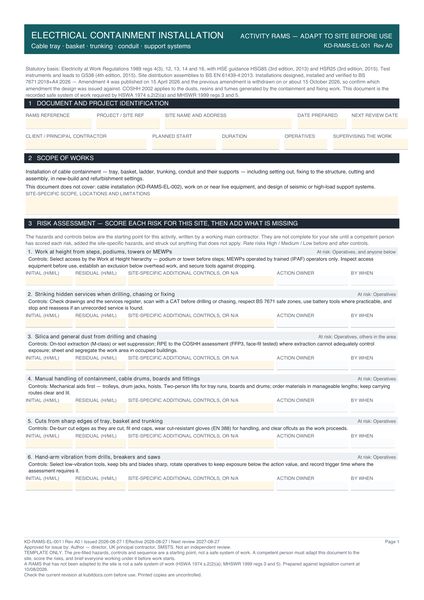
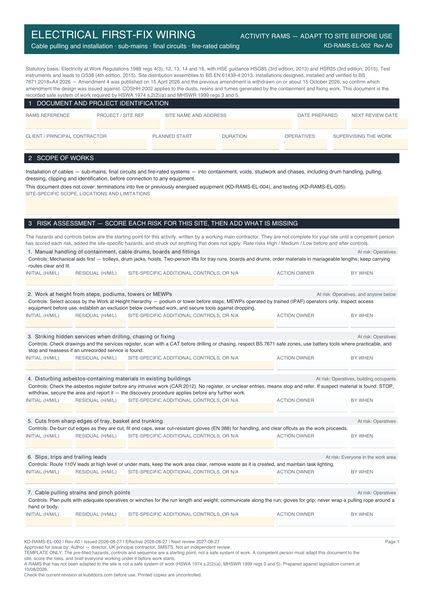
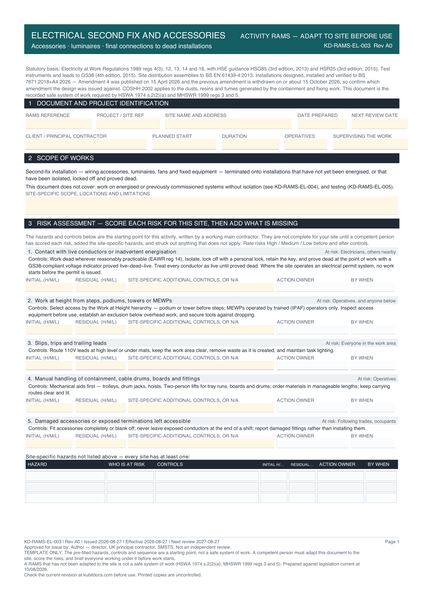
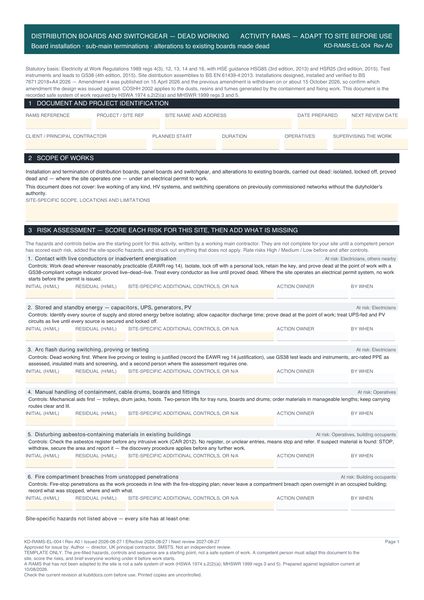
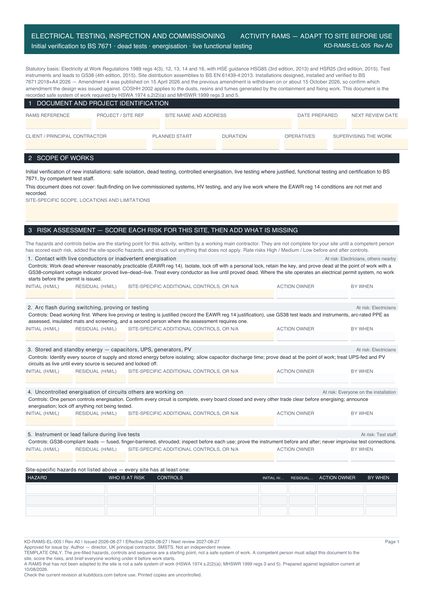
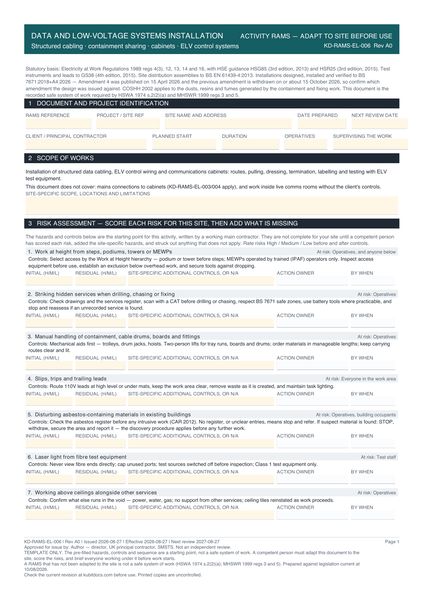
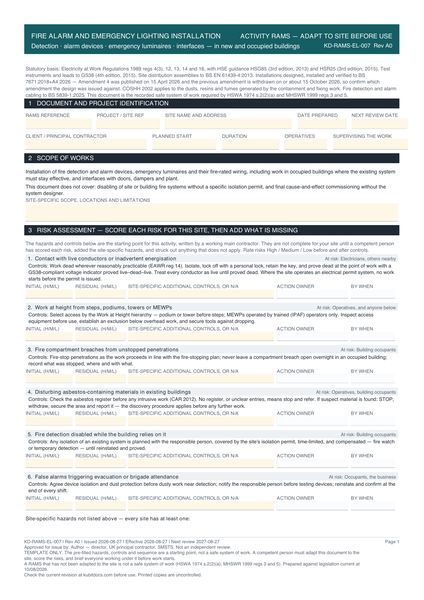
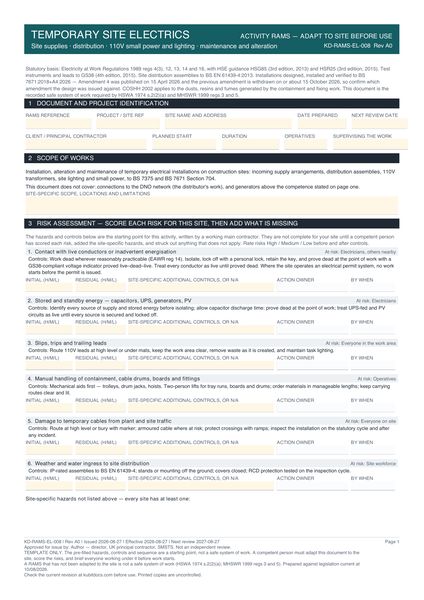
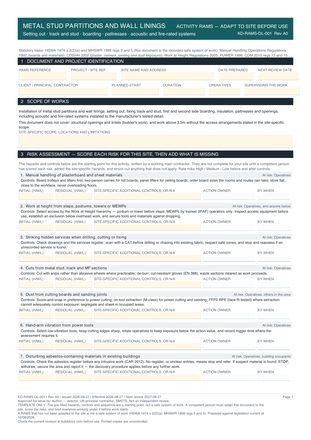
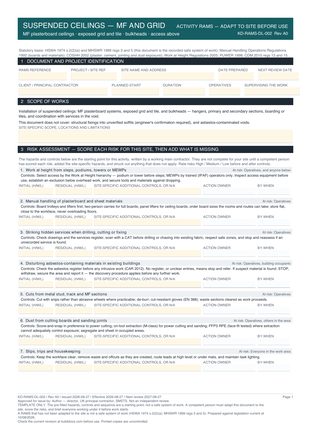
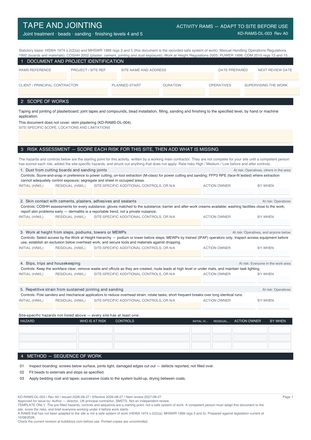
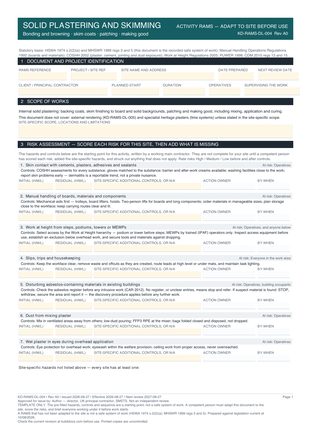
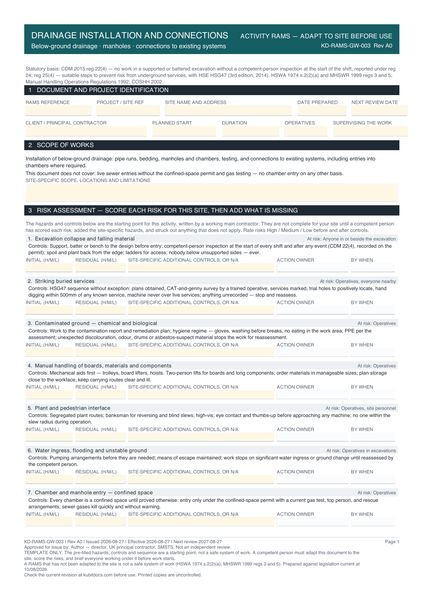
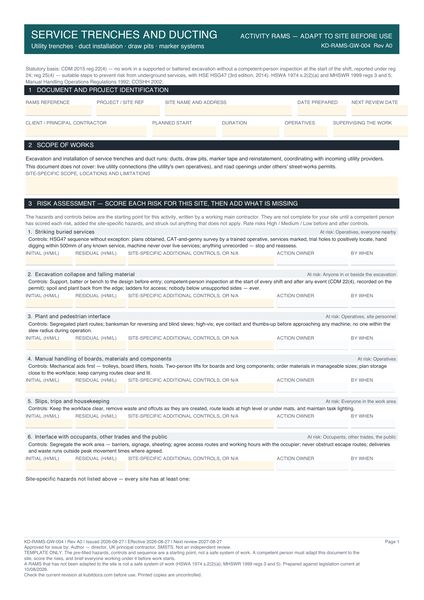
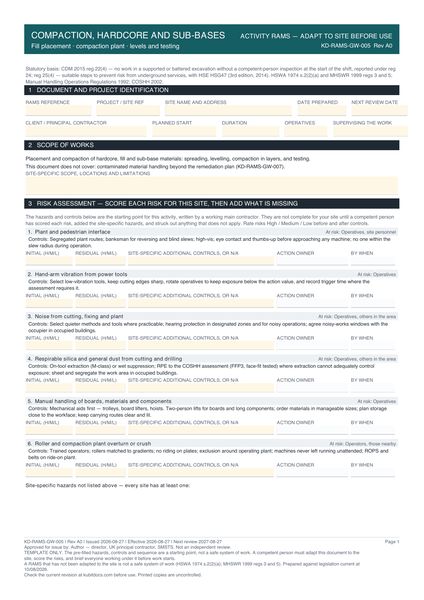
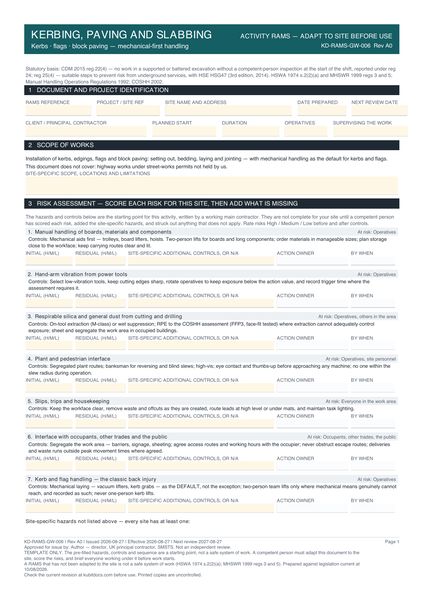
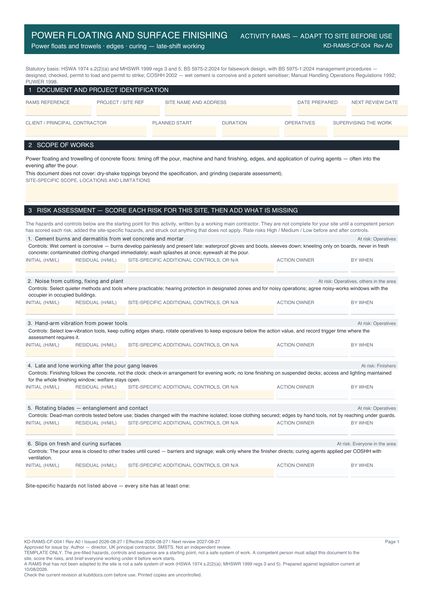
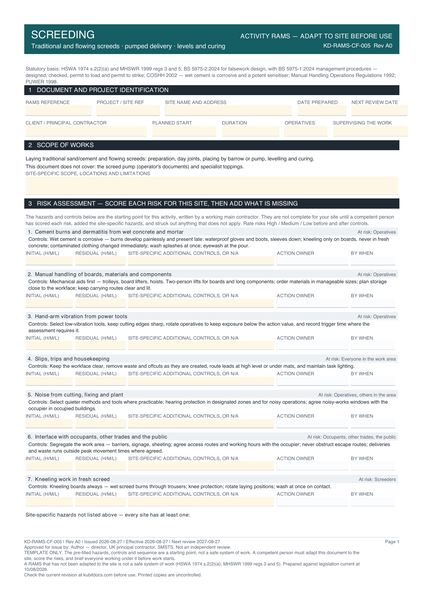
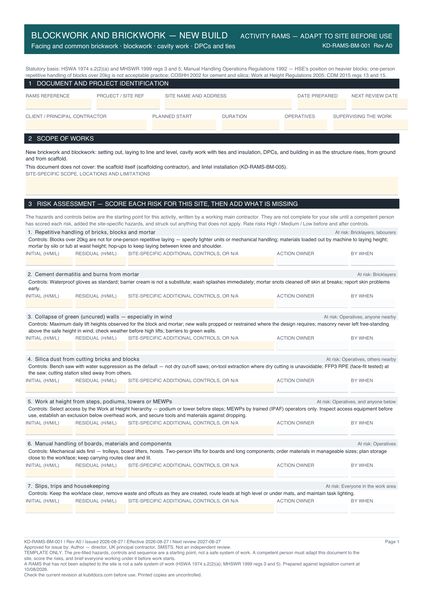
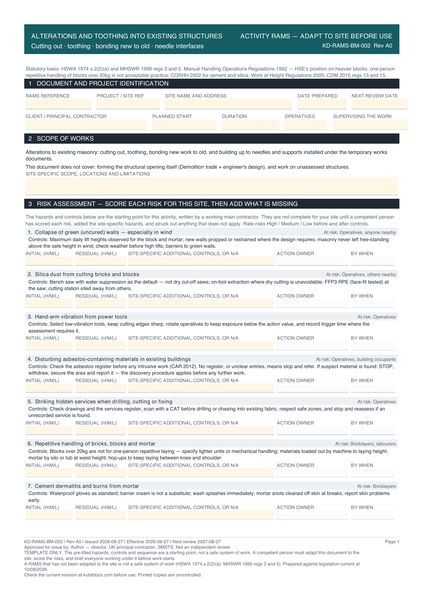
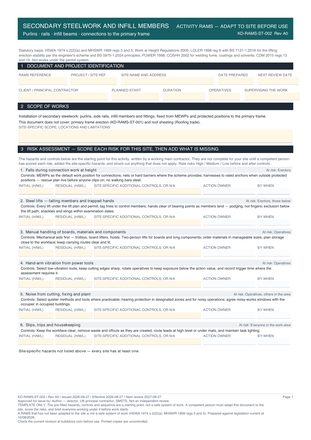
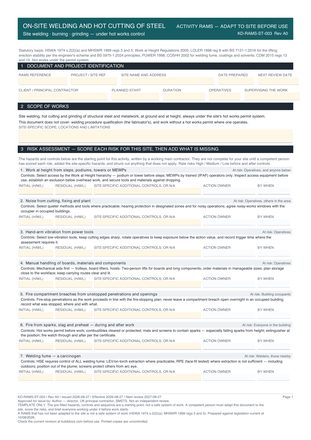
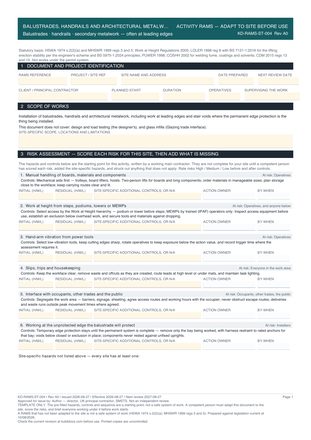
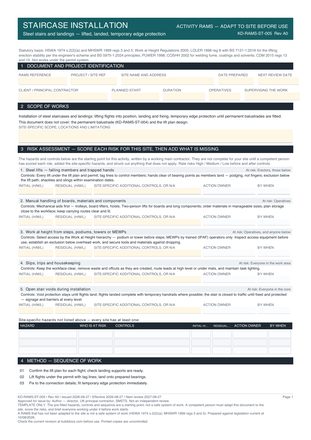
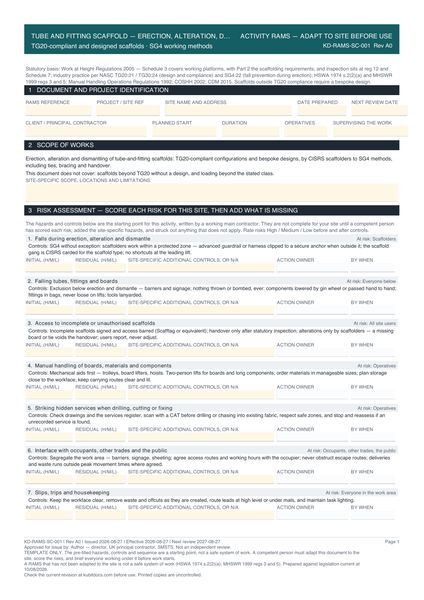
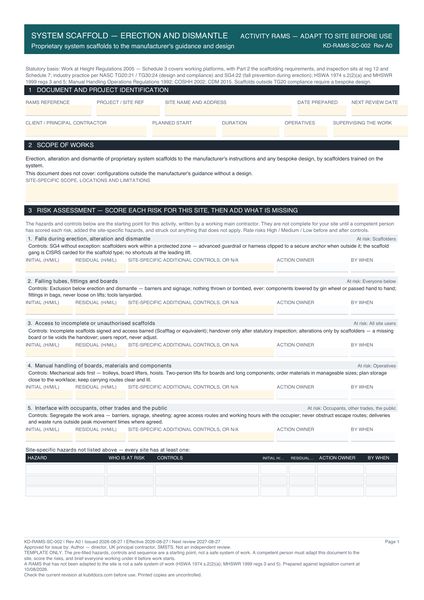
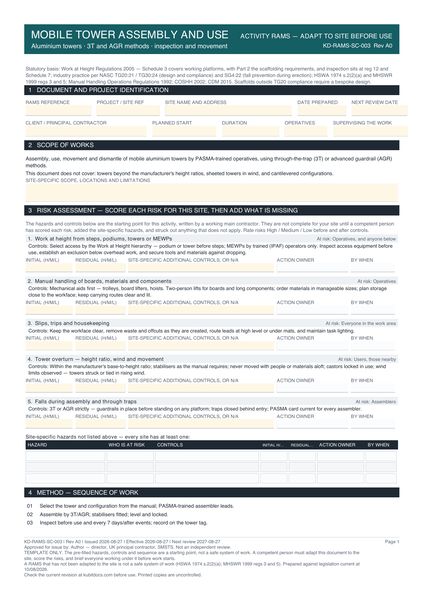
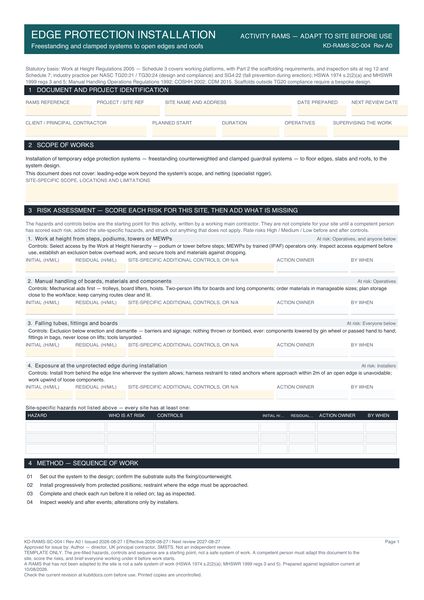
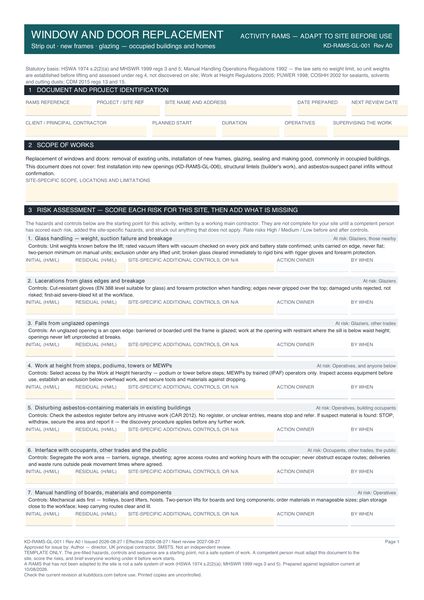
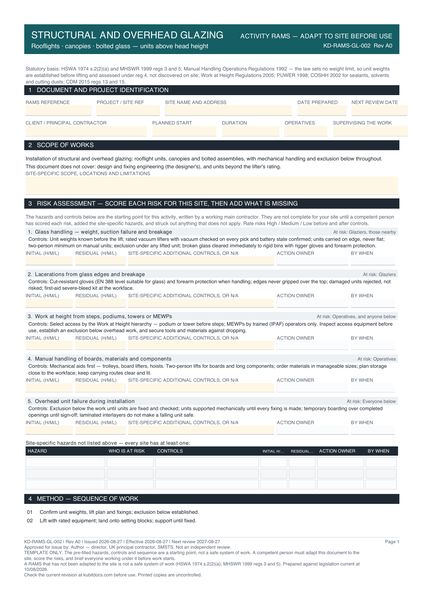
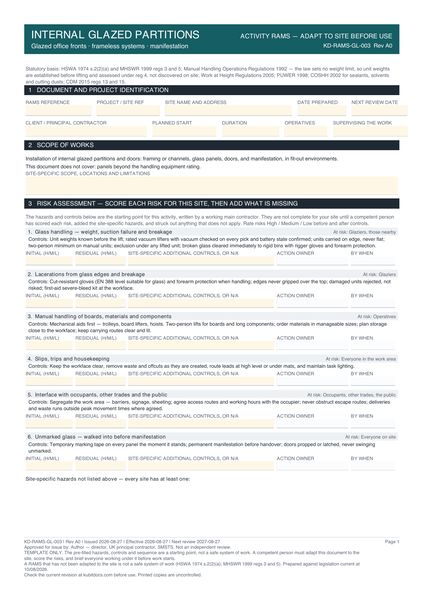
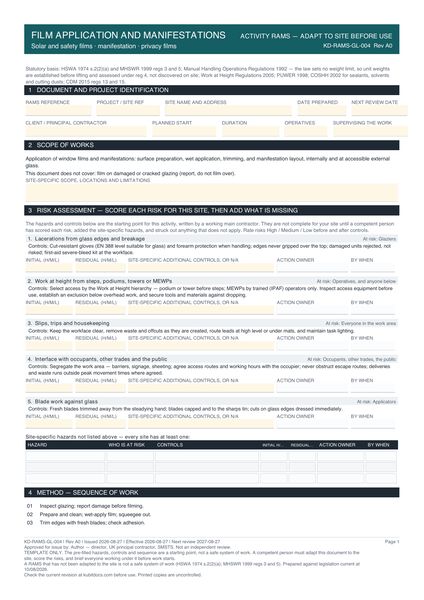
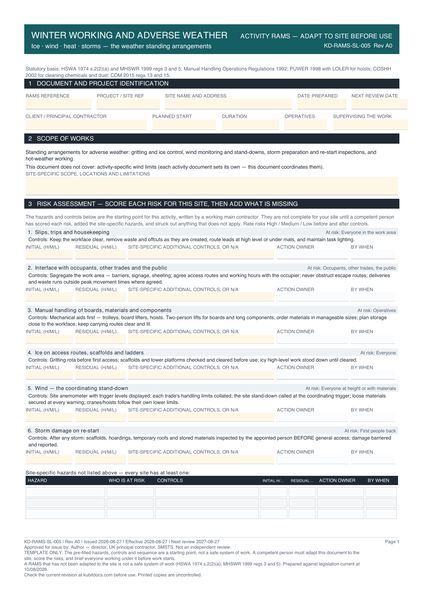
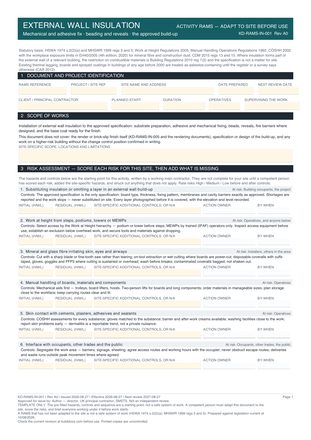
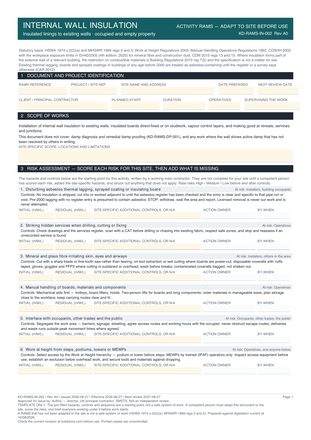
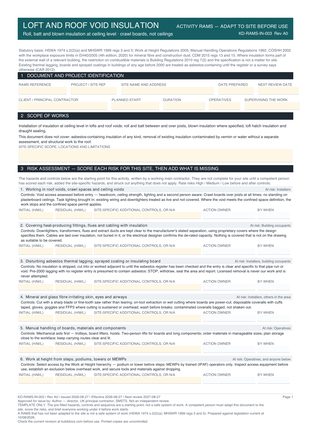
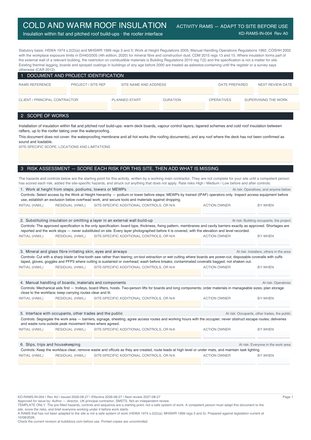
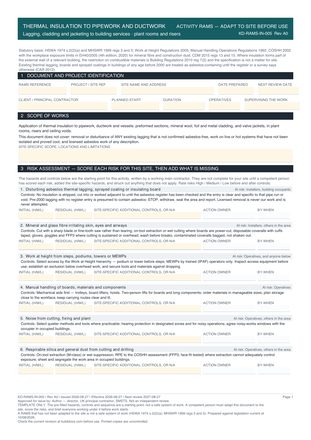
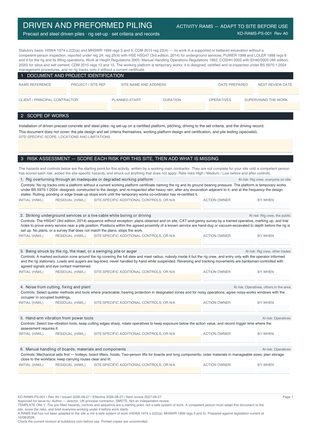
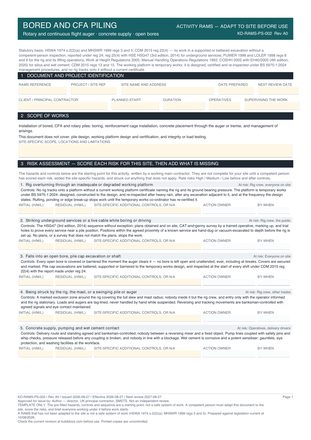
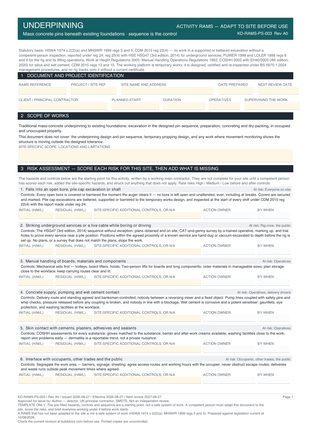
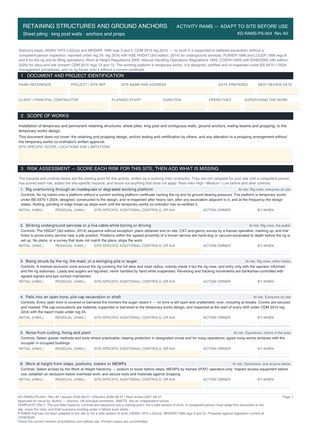
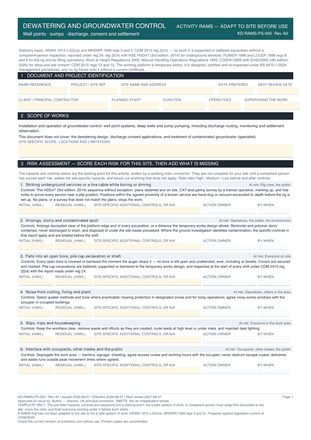
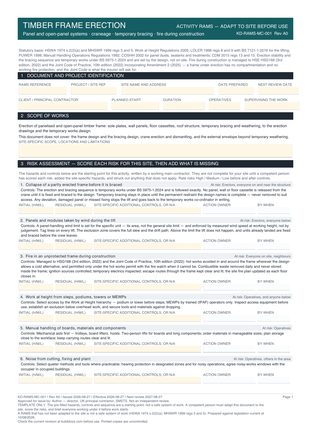
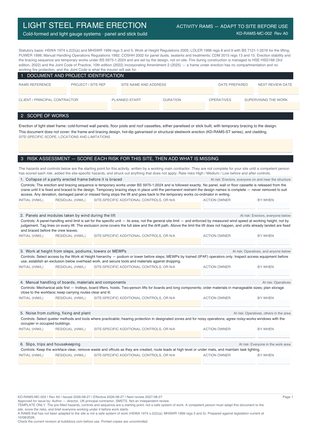
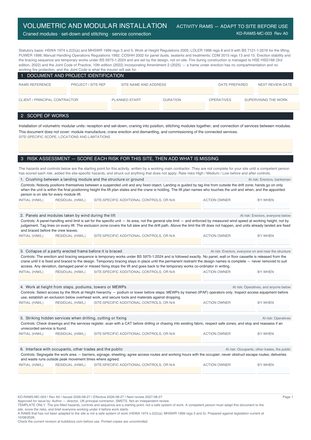
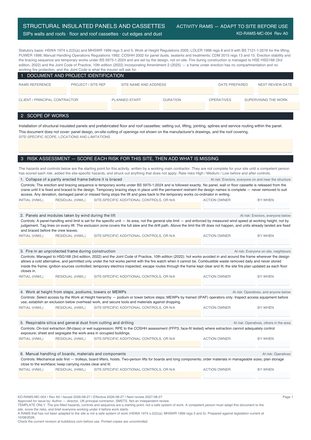
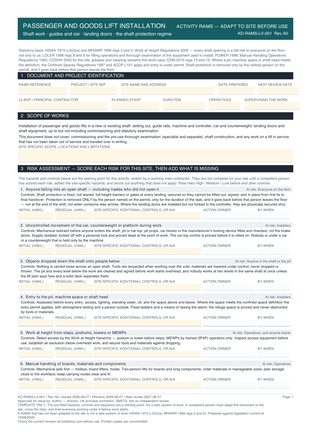
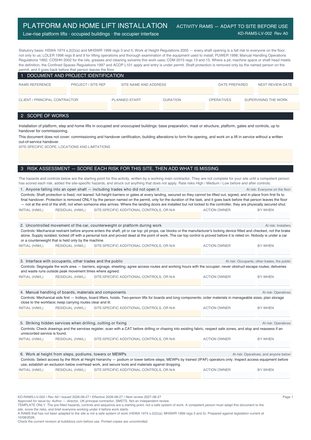
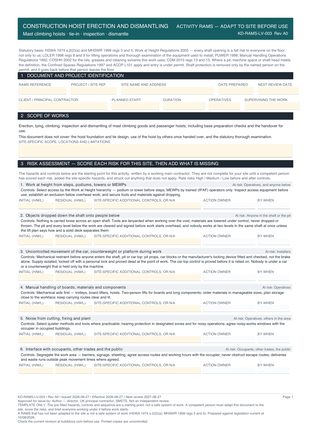
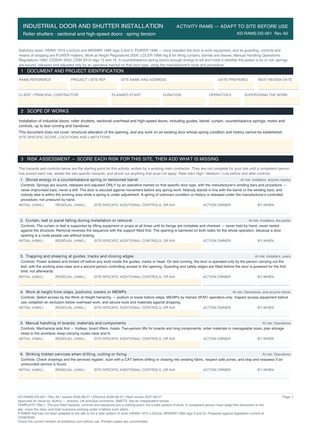
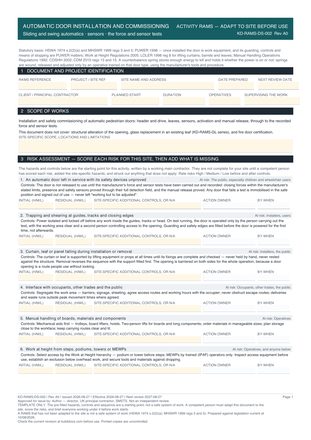
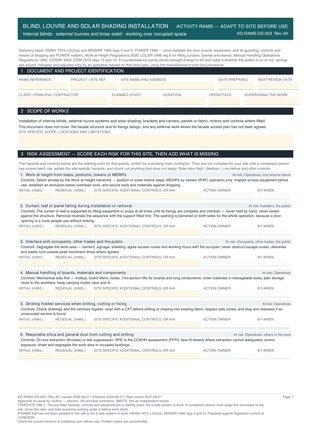
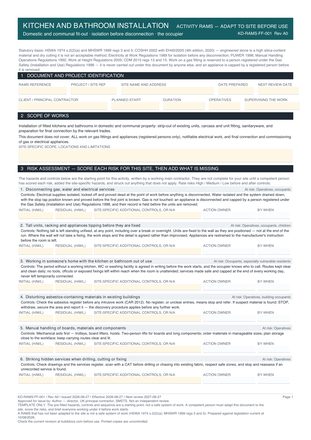
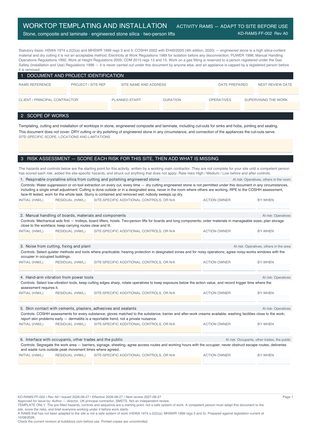
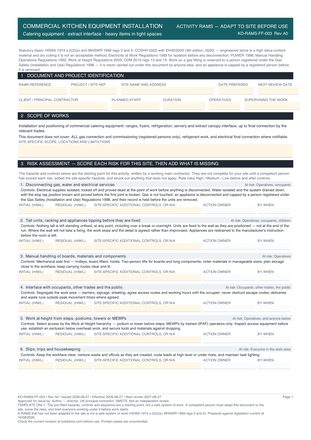
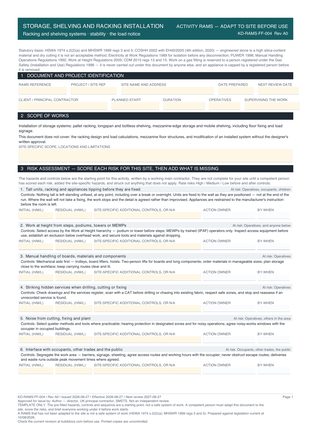
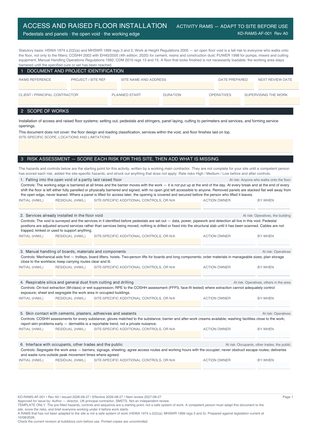
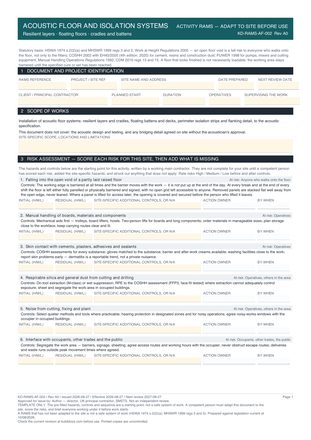
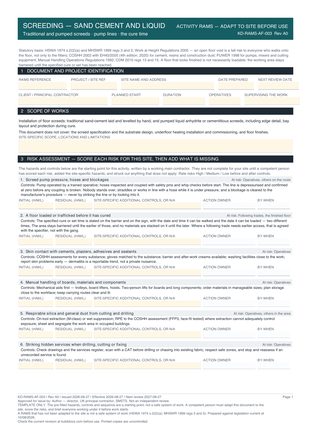
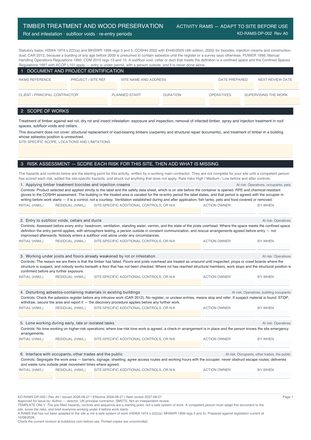
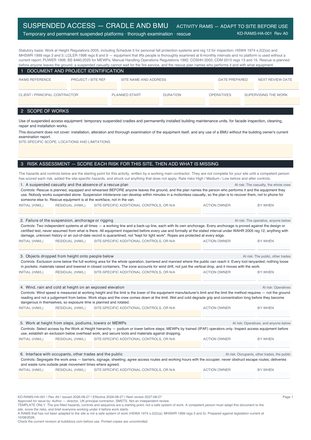
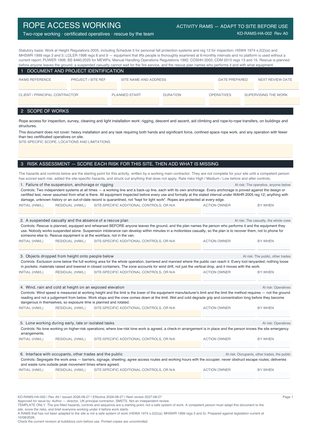
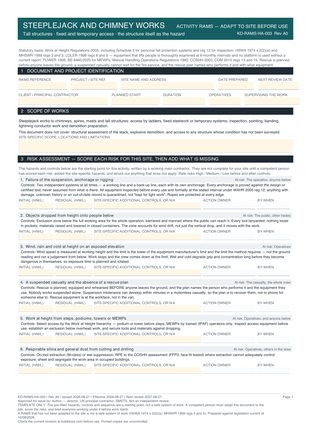
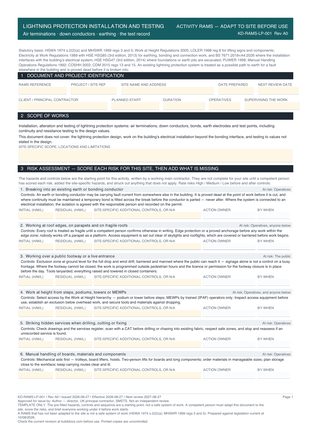
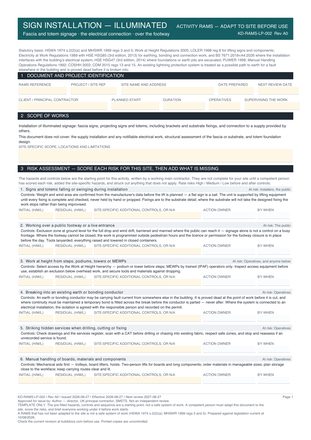
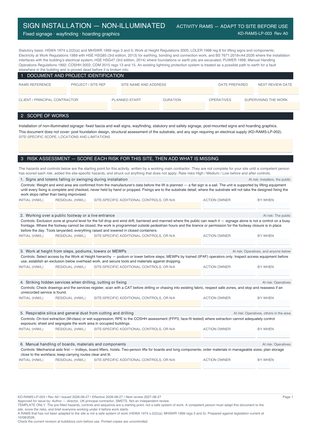
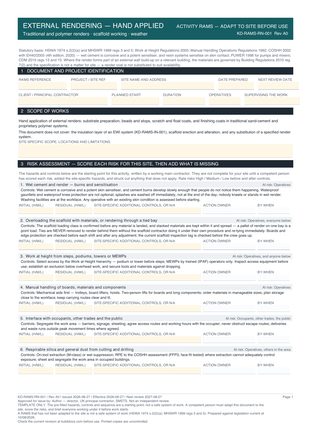
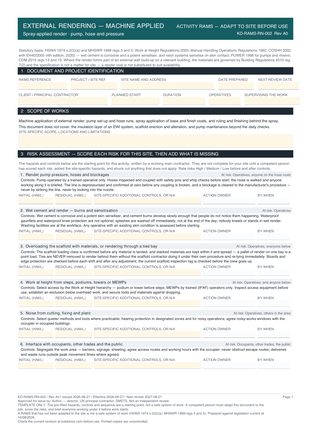
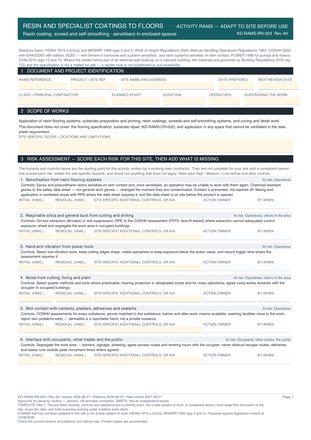
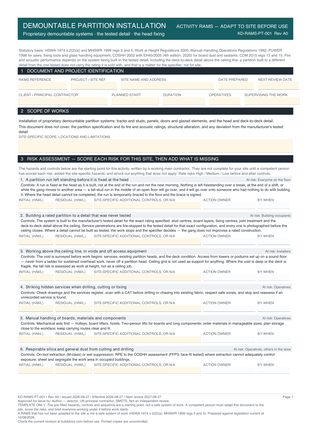
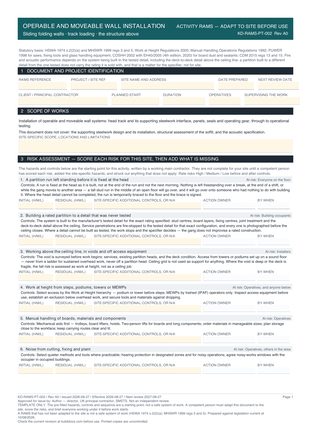
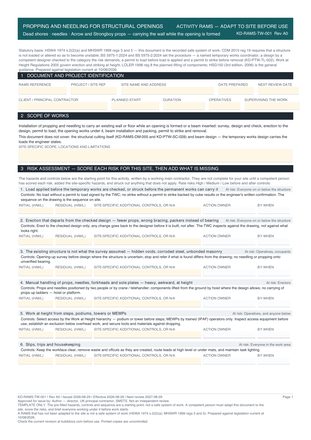
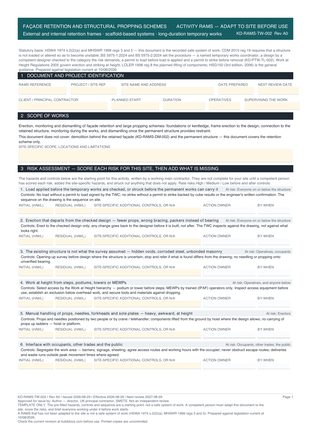
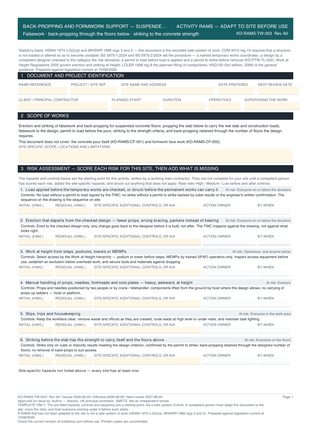
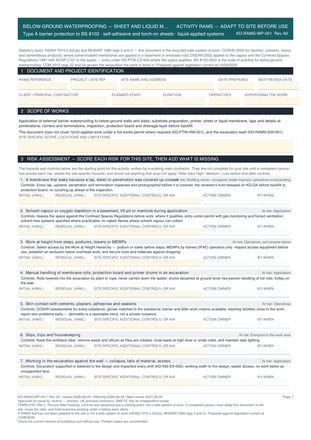
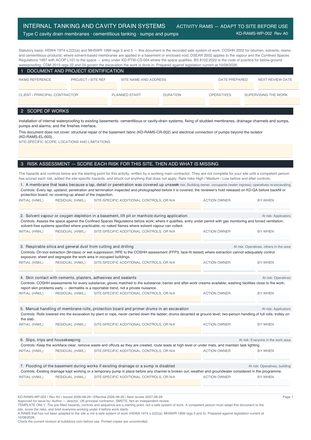
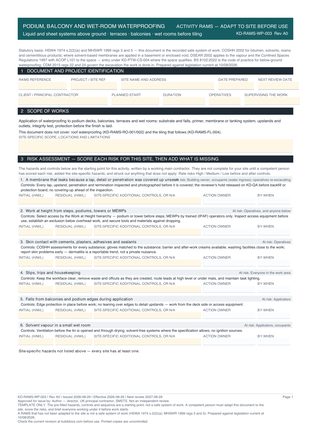
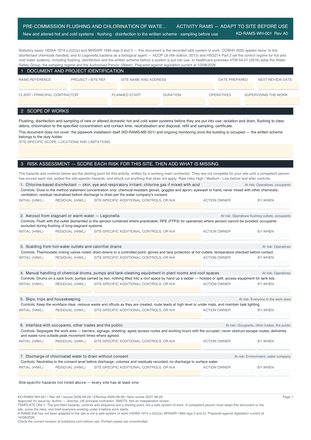
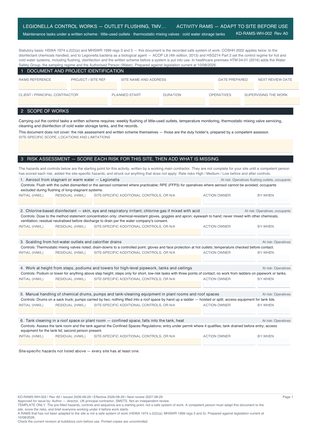
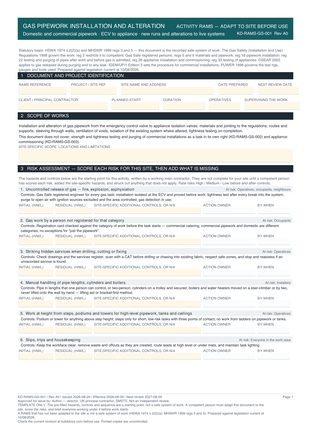
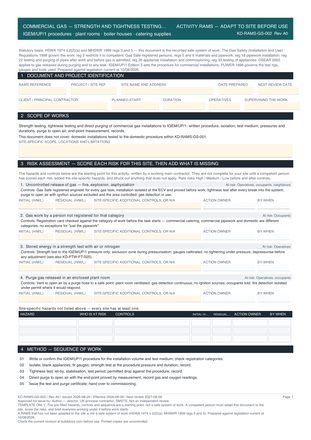
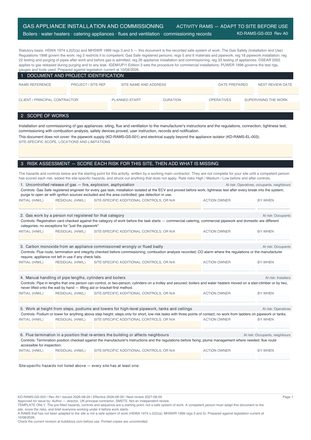
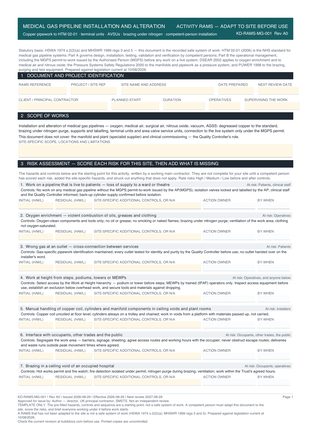
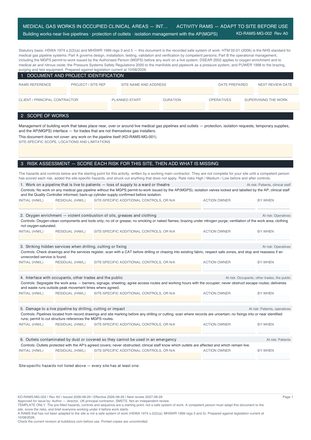
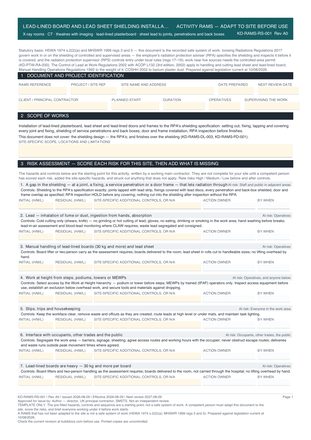
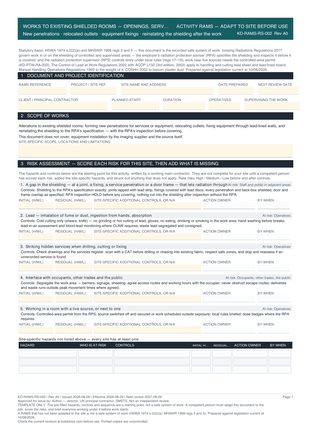
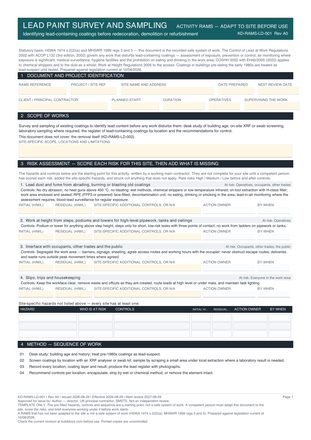
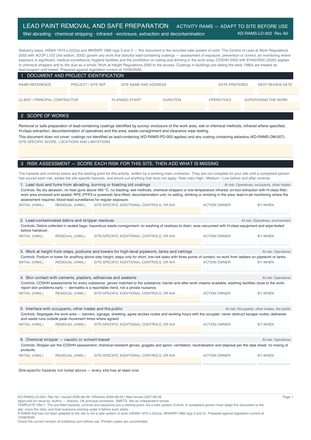
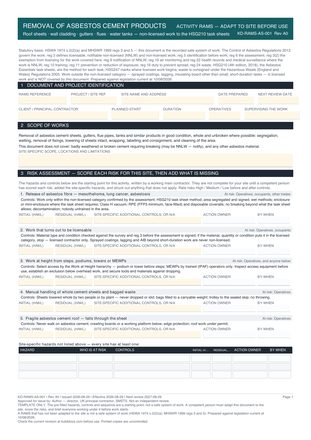
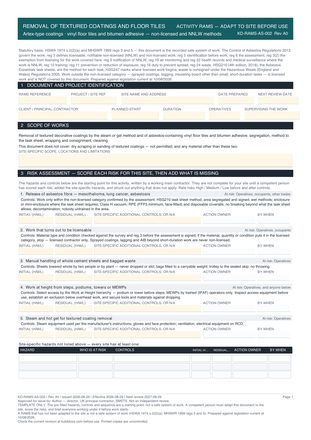
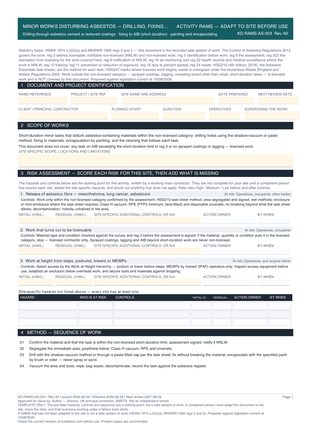
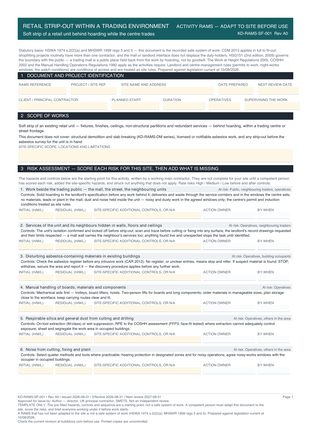
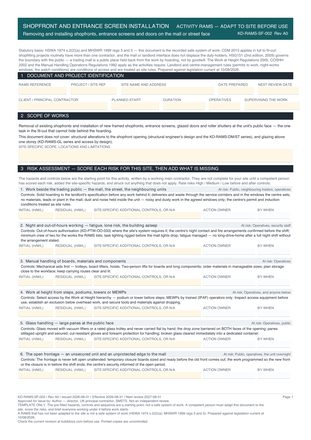
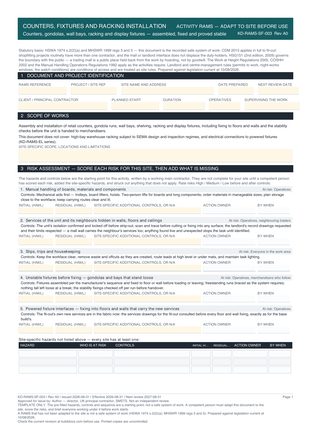
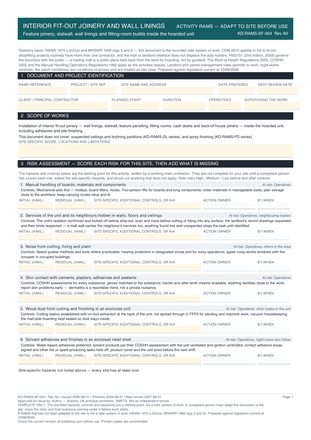
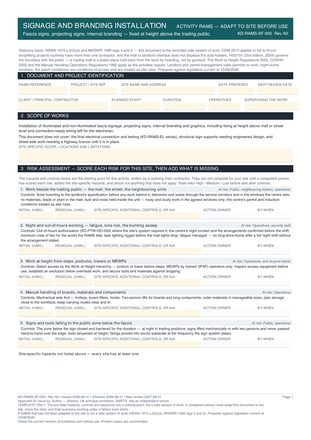
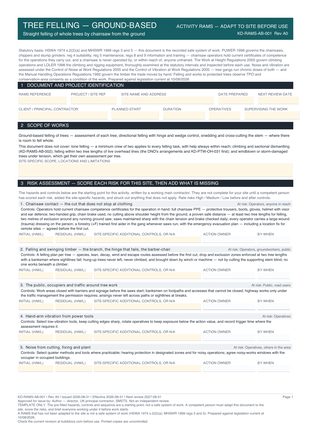
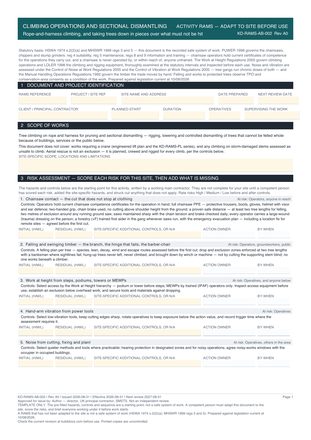
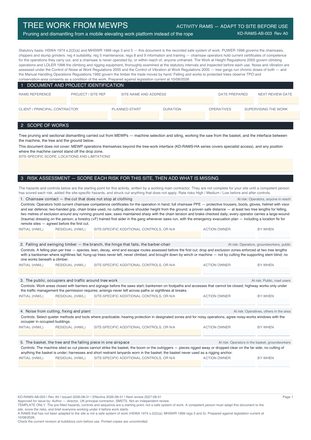
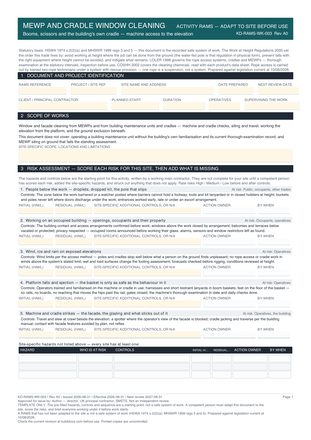
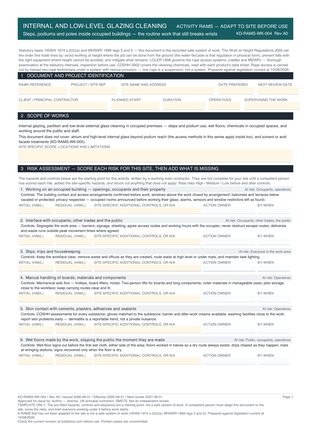
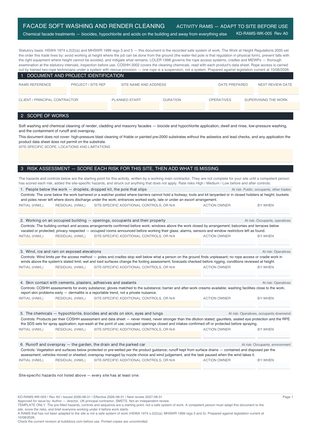
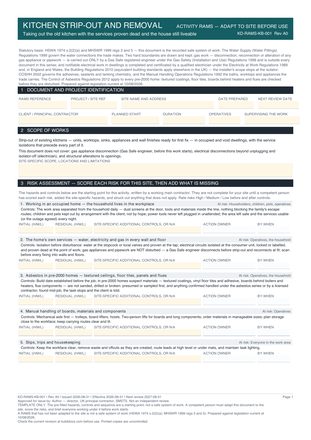
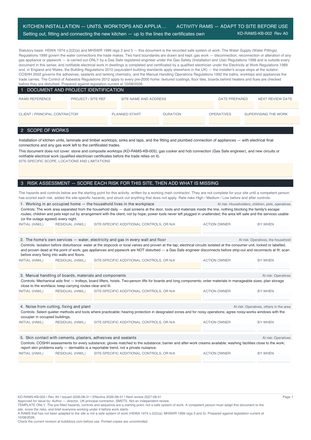
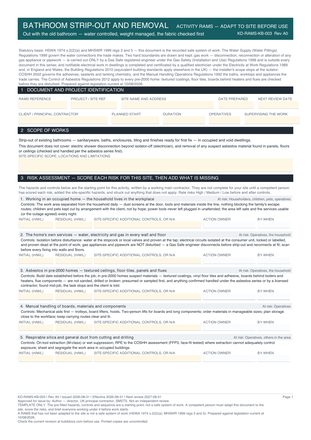
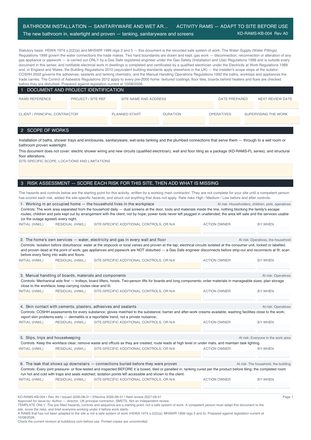
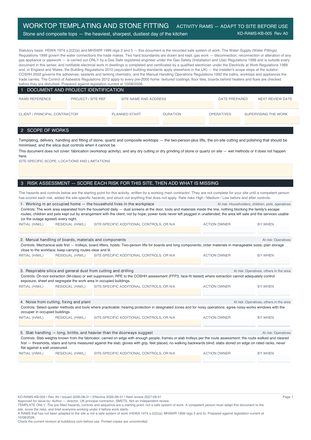
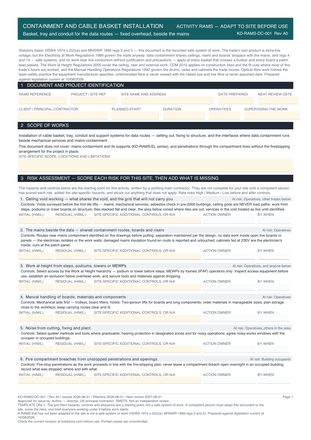
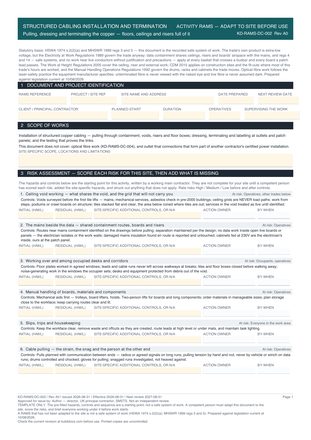
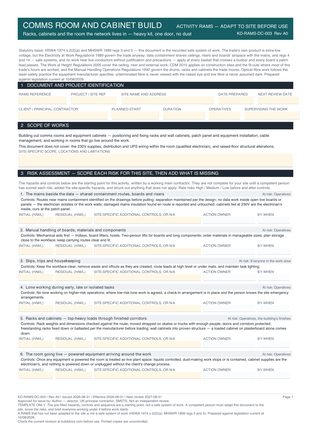
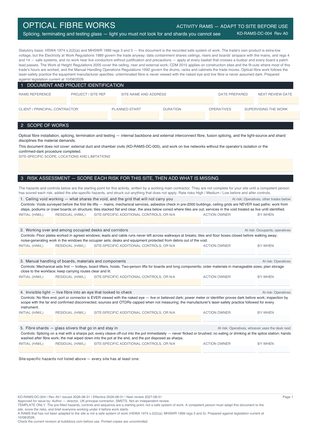
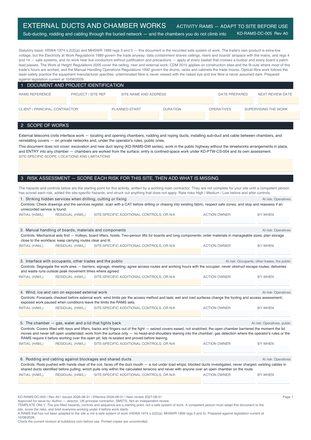
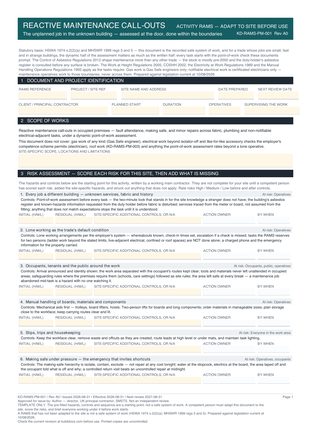
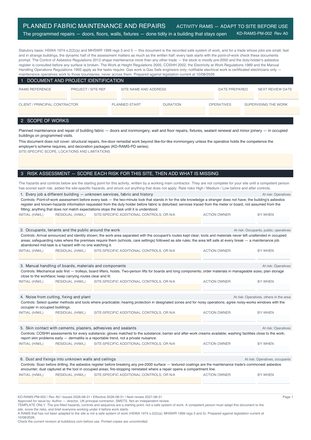
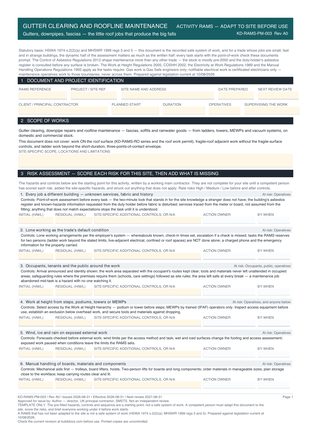
What comes with every document
The same six things come with a single document or the whole library.
Fill it your way
Guided PDFs with a tooltip on every field, or complete it online. Type your site once and every document in the pack opens with it filled in.
Your logo on every page
Upload it once. It prints at the top of every page of every document you download, included with any purchase.
The law, cited
Each document shows the regulation it rests on. Check our working.
Yours to keep
No subscription, no login, no expiry. Revisions included.
Written from the approving side
By a contractor who reviews subcontractor submissions, and sends them back.
Kept current, free
Every source is re-checked monthly. A change that matters raises a revision, and you get it free.
How it works
Four steps, in this order.
- 1
Choose
A single document, a bundle for one hazard, or a pack for your trade or sector. Pay once.
- 2
Enter your site once
Site, reference, address, client, principal contractor. Every document in the pack opens with them filled in.
- 3
Add your logo
Upload it once. It prints at the top of every page of every document you download.
- 4
Download it finished
Filled, flattened, licensed to your business. When the law moves, the revision is free.
Legal basis
What these documents are built on.
Printed on the forms themselves, so you and whoever reviews your submission are reading the same references. Law and guidance are kept apart, because they are not the same thing.
Statutory provisions
- Electricity at Work Regulations 1989 regs 4(3), 12–14 and 16
- Electricity at Work Regulations 1989 reg 4(3)
- HSWA 1974 s.2(2)(a)
- MHSWR 1999 regs 3 and 5
- Manual Handling Operations Regulations 1992 no statutory weight limit — assess under reg 4
- COSHH 2002 plaster, cement and dust exposure; cement — corrosive to skin; cement and silica; adhesives, resins, silica; paints, solvents and preparation dusts; cleaning chemicals and dusts; panel dusts, sealants and treatments; oils, greases and cleaning solvents; bitumen, solvents, resins, cement; barium plaster
- Work at Height Regulations 2005 the shaft as an opening and a fall risk; open voids and floor-level openings are a fall risk; falls from edges, staging and scaffolds
- PUWER 1998 saws and nailers; hoists per LOLER; the installed door as work equipment — guarding, controls and stopping; pumps and mixers; saws, fixing tools and glass handling equipment
- CDM 2015 regs 13 and 15
- LOLER 1998 reg 8 offloading and lifting trusses; panel lifts; lifting curtains, barrels and leaves; rigging and removing cut sections; lifting signs and components
- CDM 2015 reg 20 — demolition planned, and the arrangements recorded in writing, before work begins
- CAR 2012 asbestos; asbestos in existing lagging and boards; asbestos in existing structures and coatings; asbestos in existing buildings
- CDM 2015 regs 22(4), 24 and 25(4) — excavation inspection and underground services
- falsework design)
- Work at Height Regulations 2005 — Schedule 3 (working platforms), Part 2 scaffolding, reg 12 and Schedule 7 inspection
- CDM 2015
- Building Regulations 2010 reg 7(2) combustible materials in external walls; where the finish forms part of an external wall build-up on a relevant building
- Building (Higher-Risk Buildings Procedures) (England) Regulations 2023 regs 18–26 change control
- Control of Lead at Work Regulations 2002
- Building Regulations 2010 reg 7 adequate and proper materials, applied so as adequately to perform the functions for which they are designed
- CDM 2015 reg 15 contractors
- Building Safety Act 2022, with the Higher-Risk Buildings (Keeping and Provision of Information etc.) (England) Regulations 2024 golden thread
- LOLER 1998 regs 8 and 9 lifting operations and thorough examination; equipment lifting persons — thorough examination at 6-monthly intervals; lifting duties
- CDM 2015 reg 22(4) and reg 24 excavation inspection and reports
- reg 25(4)
- Confined Spaces Regulations 1997
- Gas Safety (Installation and Use) Regulations 1998 gas work by a registered person only
- Electricity at Work Regulations 1989 isolation before disconnection; services within the structure
- Work at Height Regulations 2005 — Schedule 5 (personal fall protection) and reg 12 inspection
- CDM 2015 reg 19 stability of structures
- DSEAR 2002 solvent-based products in enclosed spaces; oxygen enrichment
- CDM 2015 regs 22 and 24 excavations
- COSHH 2002 (chlorine-based disinfectants
- legionella as a biological agent)
- Gas Safety (Installation and Use) Regulations 1998 regs 3, 5, 6, 18, 22, 26 and 33 competence, materials, pipework, testing and purging of pipes, appliance installation, testing of appliances
- IGEM/UP/1 Edition 3 commercial strength and tightness testing and purging
- Pressure Systems Safety Regulations 2000
- Ionising Radiations Regulations 2017 regs 8, 9, 17, 18 and 19 risk assessment, restriction of exposure, controlled areas, local rules
- Control of Asbestos Regulations 2012 regs 3, 5, 6, 9, 10, 11, 16, 19, 22 and 24
- Hazardous Waste (England and Wales) Regulations 2005
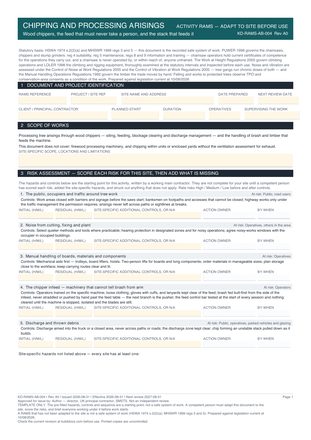
- PUWER 1998 regs 4, 5, 8 and 9 — chainsaws, chippers and grinders, operator training and maintenance
- LOLER 1998 — climbing and rigging equipment
- Control of Noise at Work Regulations 2005
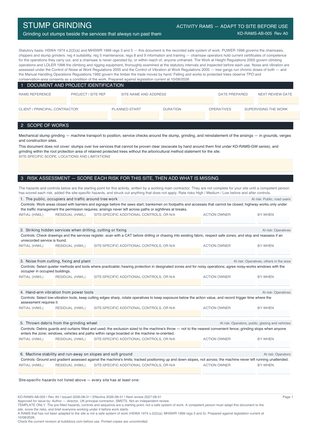
- Control of Vibration at Work Regulations 2005
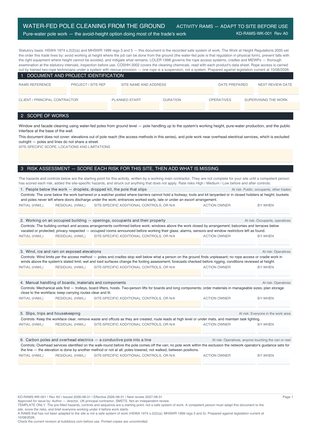
- Work at Height Regulations 2005 — the hierarchy decides the method, not habit
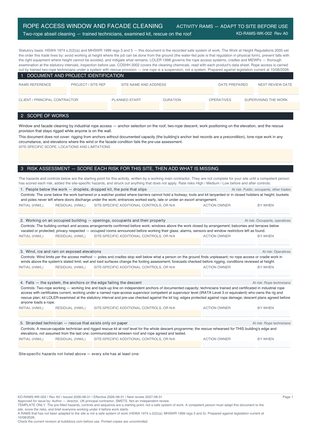
- LOLER 1998 — rope access equipment, cradles and MEWPs
- COSHH 2002 — cleaning chemicals
- Water Supply (Water Fittings) Regulations 1999
- Electricity at Work Regulations 1989 — the connections the trade makes and the ones it must not
- Control of Asbestos Regulations 2012 — pre-2000 homes
- Electricity at Work Regulations 1989 regs 4 and 14 — working beside the mains the data follows
- Control of Asbestos Regulations 2012 — the building stock is mostly pre-2000
- CDM 2015 reg 25(2) and (3) overhead electric power cables
- Electricity at Work Regulations 1989 reg 14
- RIDDOR 2013 Schedule 2 dangerous occurrences
- CDM 2015 regs 27 and 28 (traffic routes
- vehicles)
- PUWER 1998 regs 25 and 26 (people carried
- rolling over)
- PUWER 1998 reg 26
- CDM 2015 reg 25(4)
- CDM 2015 regs 26 and 28(6) (prevention of drowning
- vehicles into water)
- Work at Height Regulations 2005 regs 6, 8(c) and 12, and Schedule 4 collective safeguards for arresting falls
Guidance and standards relied on — not law
- HSG85 and HSR25
- BS 7671:2018+A4:2026 safe zones, segregation; support spacings, segregation; initial verification sequence; the electrical interface; the earthing arrangement is set by the design, not on site
- HSE GS38 (4th edition, 2015) proving dead before work; voltage indicators, live–dead–live proving; test equipment and leads
- HSG85 3rd edition, 2013
- BS 6701:2016+A1:2017 with BS 7671:2018+A4:2026 separation and segregation
- BS 8519:2020 fire-resistant cable systems
- BS 5839-1:2025 fire detection and alarm cabling
- BS 7671:2018+A4:2026 Section 704 with BS 7375:2010 and HSG141 2nd edition, 2023
- EH40/2005 (2020) workplace exposure limits — hardwood dust a carcinogen
- BS 5975-1:2024 temporary works — roof bracing until the structure is stable; temporary works control; temporary works management — the working platform; temporary works management — erection stability and bracing sequence; temporary works management — propping before any structural cut; temporary works procedures
- BS 6187:2011 demolition code of practice
- EH40/2005 (2020) respirable crystalline silica
- HSE HSG47 3rd edition, 2014 — avoiding danger from underground services; 3rd edition, 2014
- BS 5975-1:2024 and BS 5975-2:2024 (temporary works management
- BS 7121-1:2016 crane interfaces; craned panel and module lifts
- NASC TG20:21 and TG30:24 design and compliance
- NASC SG4:22 preventing falls in scaffolding operations
- HSE HSG33 health and safety in roof work, 5th edition, 2020
- Joint Code of Practice, 10th edition (2022) incorporating Amendment 2 (2025) hot works on roofs
- ACOP L132 (3rd edition, 2002) lead in pre-1980s coatings; lead sheet and lead-lined boards; assessment, control, air monitoring, medical surveillance
- BS 8460:2025 MEWPs
- EH40/2005 (4th edition, 2020) mineral fibre and dust; cement, resins and dust; respirable crystalline silica; biocides, injection creams and dust; cement, silica and resin systems; board dust and sealants
- HSE HSG47 (3rd edition, 2014) underground services; buried services where foundations are excavated
- EH40/2005 4th edition, 2020
- HSE HSG168 (3rd edition, 2022) and the Joint Code of Practice, 10th edition (2022) incorporating Amendment 2 (2025) fire during construction
- ACOP L101 pits and machine spaces where they qualify; subfloor voids and cellars; basements and manholes
- EH40/2005 (4th edition, 2020) — respirable crystalline silica from engineered stone
- HSE HSG85 (3rd edition, 2013) earthing, bonding and connection
- HSE HSG33 (5th edition, 2020) roof work
- BS 5975-1:2024 and BS 5975-2:2024 temporary works — procedures, the temporary works coordinator, design check, permit to load and to strike
- HSG150 3rd edition, 2006
- BS 8102:2022 protection of below-ground structures against water ingress
- ACOP L8 (4th edition, 2013) and HSG274 Part 2 hot and cold water systems
- HTM 04-01 (2016) where the premises are healthcare
- HTM 02-01 (2006) Parts A and B medical gas pipeline systems — installation, validation, the MGPS permit-to-work
- EH40/2005 (2020) for paint strippers and dust
- HSG210 (4th edition, 2018) and HSG247 — non-licensed work, notifiable non-licensed work, training, control, RPE, waste
- HSG151 (2nd edition, 2009) — work beside the trading public
- HSE GS6 4th edition, 2013
- BS 7121-1:2016 and BS 7121-5:2019 tower cranes
- HSE HSG144 2009
- BS EN 1263-1:2014
- BS EN 1263-2:2014
- BS 8411:2019
HSE guidance, British Standards and industry codes are not statute and carry no force in themselves — they are the standard the document is built to. And citing an instrument is not the same as satisfying it: what discharges the duty is a competent person in your business assessing this job and completing the document properly.
Our one rule
We will not tell you this makes you compliant.
No template can. HSE says it of its own examples: “Do not just copy an example and put your company name to it as that would not satisfy the law and would not protect your employees.” SSIP assessors want risk assessments written for a specific project within the last twelve months, and a generic document with your logo on it is unlikely to pass, whoever sold it to you.
What you are buying is the structure and the prompts — every section the law and HSE guidance expect the document to address, with the reference beside it. The judgement stays yours.
Why we don’t say “compliant”Before you buy
Will the main contractor accept it?
No template can promise that, and we won’t. It is written from the approving side of the desk, but your competent person adapts it to the job and signs it off. That step is what makes it yours.
Is VAT included in the price?
No. Prices are ex VAT; VAT is added at checkout.
What format is it?
A fillable PDF with a tooltip on every field. Or complete it online: type your site once and it downloads finished, with your logo on every page.
What happens when the law changes?
Every source is re-checked monthly. A change that matters raises a revision, and you get it free.
Is it a subscription?
No. Pay once. No subscription, no login, no expiry.