Permit to work template
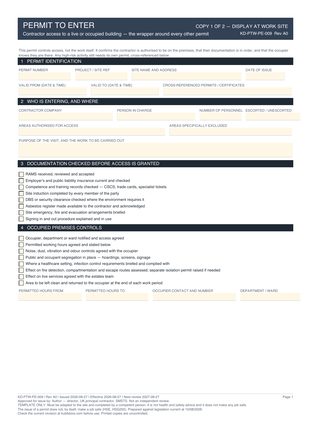
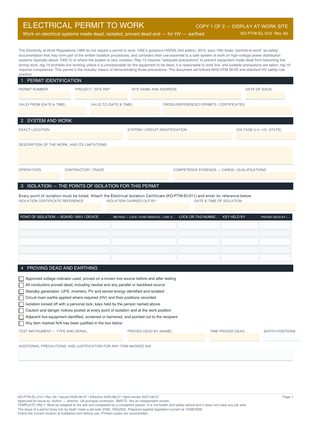
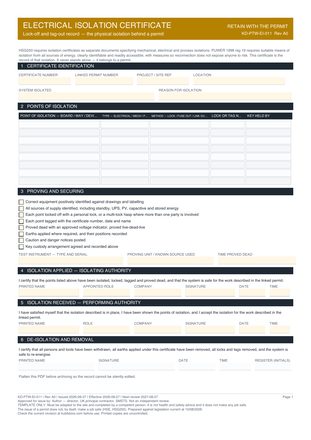
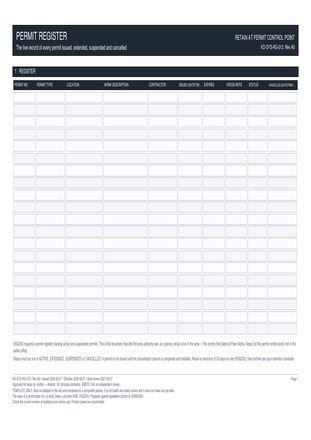
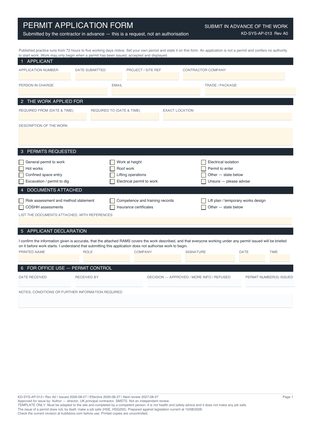
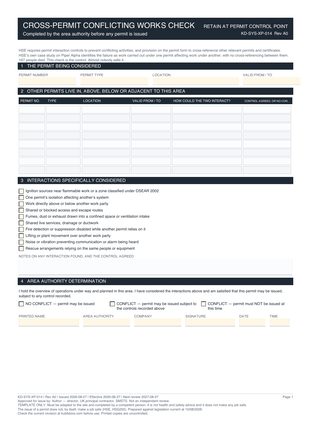
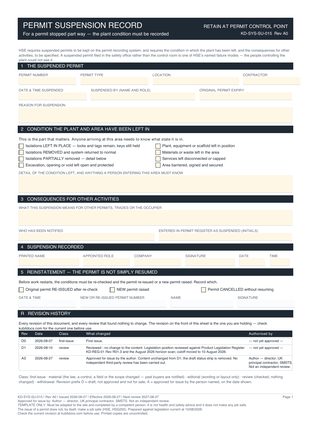
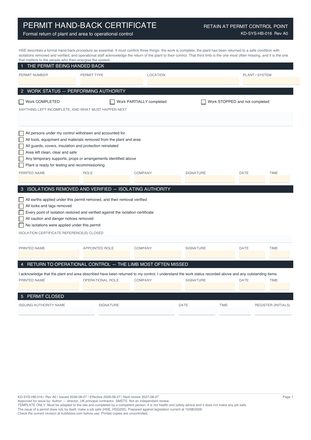
Most people searching for a permit to work template want one form. What makes a permit system work is the sequence around it: an application, a check against other work in the same area, an isolation that somebody verified, a permit issued by one person and authorised by another, acceptance by the person doing the work, a register, and a hand-back that returns control. A single form on its own controls nothing, which is why this is built as the whole system.
33 documents. Helmet colours vary from site to site. This is a common convention, not a legal standard.
Written for this
33 documents — the whole permit system.
Each document covers one step of the permit system and cross-references the ones it is issued with.
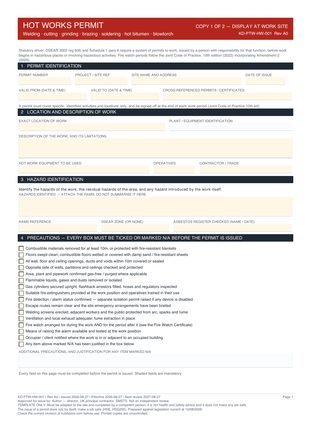
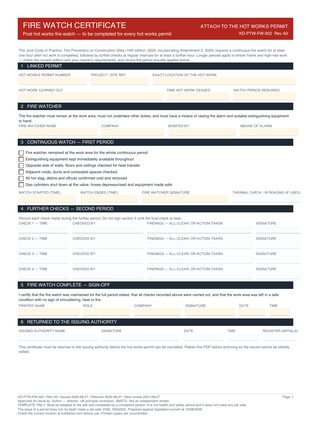
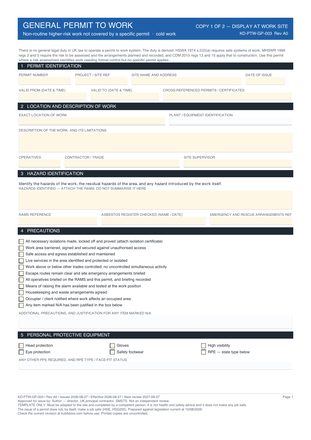
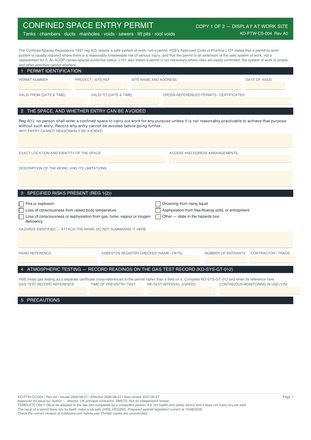
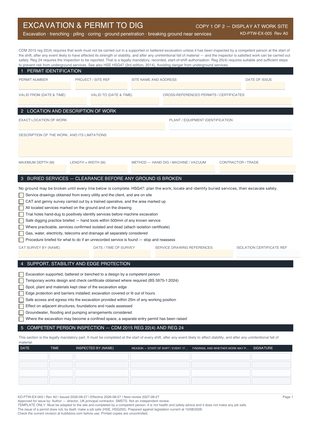
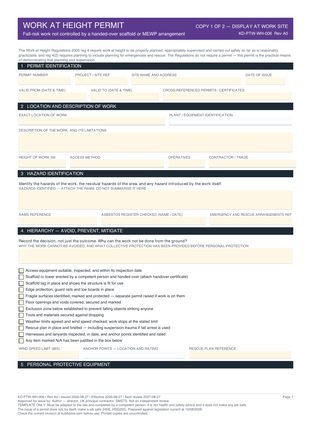
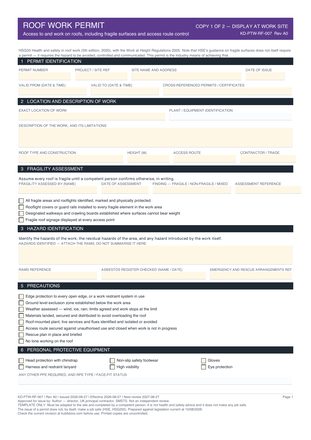
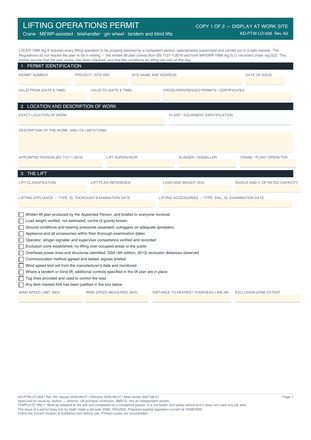
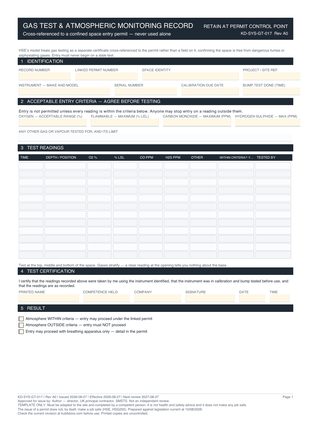
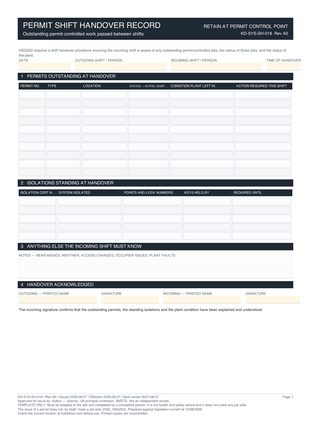
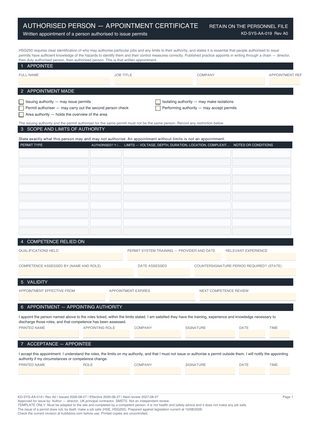
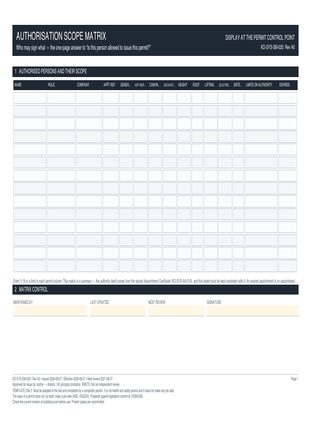
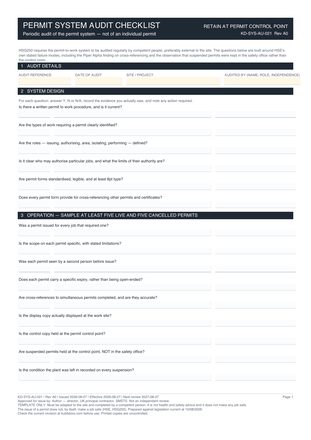
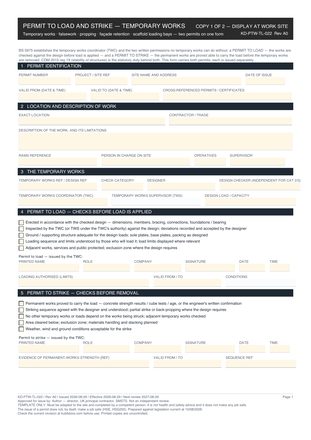
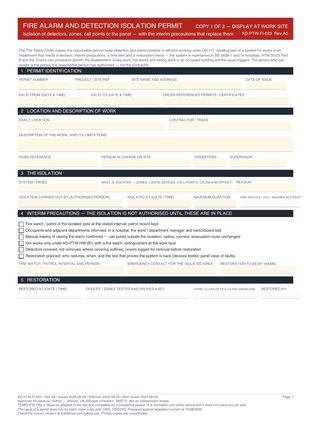
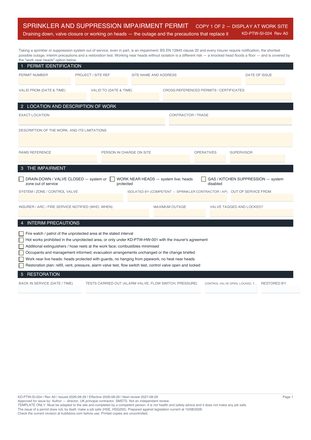
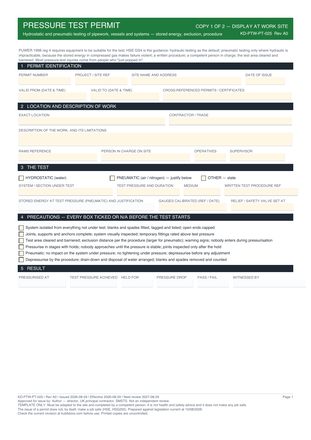
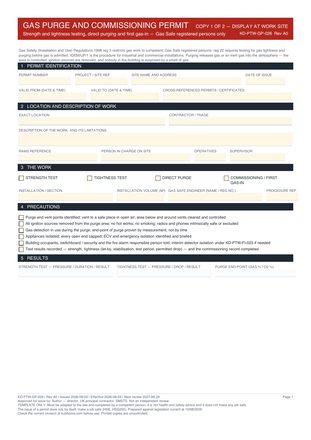
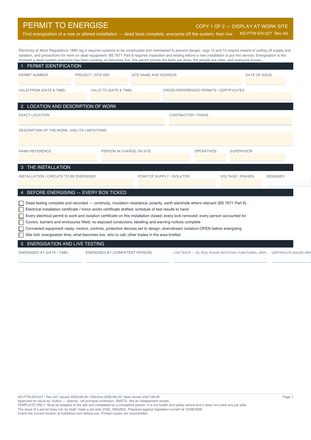
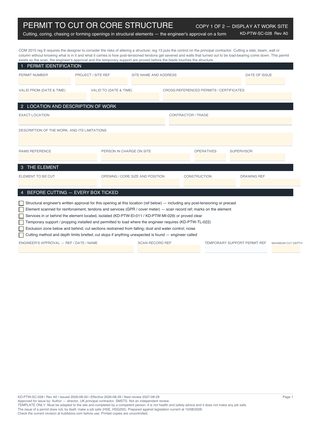
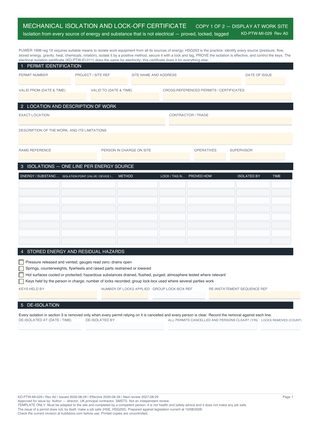
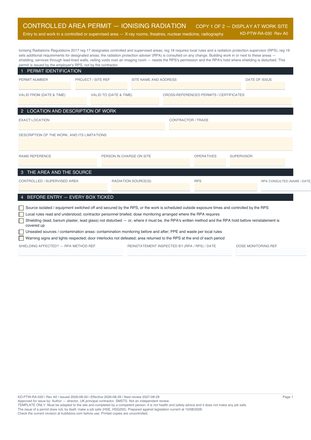
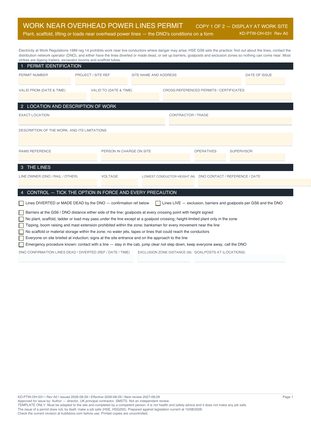
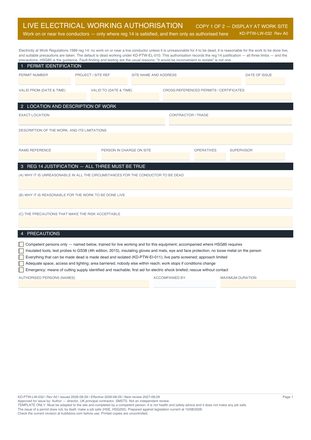
What comes with every document
The same six things come with a single document or the whole library.
Fill it your way
Guided PDFs with a tooltip on every field, or complete it online. Type your site once and every document in the pack opens with it filled in.
Your logo on every page
Upload it once. It prints at the top of every page of every document you download, included with any purchase.
The law, cited
Each document shows the regulation it rests on. Check our working.
Yours to keep
No subscription, no login, no expiry. Revisions included.
Written from the approving side
By a contractor who reviews subcontractor submissions, and sends them back.
Kept current, free
Every source is re-checked monthly. A change that matters raises a revision, and you get it free.
How it works
Four steps, in this order.
- 1
Choose
A single document, a bundle for one hazard, or a pack for your trade or sector. Pay once.
- 2
Enter your site once
Site, reference, address, client, principal contractor. Every document in the pack opens with them filled in.
- 3
Add your logo
Upload it once. It prints at the top of every page of every document you download.
- 4
Download it finished
Filled, flattened, licensed to your business. When the law moves, the revision is free.
Legal basis
What these documents are built on.
Printed on the forms themselves, so you and whoever reviews your submission are reading the same references. Law and guidance are kept apart, because they are not the same thing.
Statutory provisions
- DSEAR 2002 reg 6(8) and Schedule 1 paragraph 6
- MHSWR 1999 regs 3 and 5
- CDM 2015 regs 13 and 15
- Confined Spaces Regulations 1997 reg 4(2)
- CDM 2015 regs 22(4), 24 and 25(4)
- Work at Height Regulations 2005 reg 4
- Work at Height Regulations 2005
- LOLER 1998 reg 8
- MHSWR 1999 reg 5(1), recorded under reg 5(2) where five or more are employed
- basic / intermediate / complex lift classification)
- Electricity at Work Regulations 1989 regs 12, 13, 14 and 16, with HSR25
- PUWER 1998 reg 19
- CDM 2015 reg 19
- Regulatory Reform (Fire Safety) Order 2005 arts 13 and 17
- Regulatory Reform (Fire Safety) Order 2005 art 17
- PUWER 1998 reg 4
- GS4 4th edition, 2012
- Gas Safety (Installation and Use) Regulations 1998 regs 3 and 22
- IGEM/UP/1 Edition 3
- Electricity at Work Regulations 1989 regs 4, 12 and 13
- CDM 2015 regs 9 and 13
- Ionising Radiations Regulations 2017 regs 17, 18 and 19
- Electricity at Work Regulations 1989 reg 14
- Electricity at Work Regulations 1989 regs 14 and 16
- CDM 2015 reg 13
Guidance and standards relied on — not law
- Joint Code of Practice, Fire Prevention on Construction Sites, 10th edition (2022) incorporating Amendment 2 2025
- ACOP L101
- HSE HSG47 3rd edition, 2014
- BS 5975-1:2024 temporary works management procedures
- HSE HSG33 5th edition, 2020
- BS 7121-1:2016 (Appointed Person
- HSE GS6 (4th edition, 2013) overhead power lines
- NHS HTM 06-02
- HSE HSG250 isolation certificates as separate documents; permit register tracking active and suspended permits; gas testing as a separate certificate cross-referenced to the permit; shift handover procedure for outstanding permit-controlled jobs; identification of who may authorise particular jobs and the limits of their authority; regular audit by competent people, preferably external to the site
- BS 5975-1:2024 and BS 5975-2:2024
- BS 5839-1:2025
- HTM 05-03 healthcare
- BS EN 12845:2015+A1:2019 clause 20
- BS 7671:2018+A4:2026 Part 6
- HSG253 2nd edition, 2006
- GS6 4th edition, 2013
- HSG85 3rd edition, 2013
HSE guidance, British Standards and industry codes are not statute and carry no force in themselves — they are the standard the document is built to. And citing an instrument is not the same as satisfying it: what discharges the duty is a competent person in your business assessing this job and completing the document properly.
Our one rule
We will not tell you this makes you compliant.
No template can. HSE says it of its own examples: “Do not just copy an example and put your company name to it as that would not satisfy the law and would not protect your employees.” SSIP assessors want risk assessments written for a specific project within the last twelve months, and a generic document with your logo on it is unlikely to pass, whoever sold it to you.
What you are buying is the structure and the prompts — every section the law and HSE guidance expect the document to address, with the reference beside it. The judgement stays yours.
Why we don’t say “compliant”Before you buy
Will the main contractor accept it?
No template can promise that, and we won’t. It is written from the approving side of the desk, but your competent person adapts it to the job and signs it off. That step is what makes it yours.
Is VAT included in the price?
No. Prices are ex VAT; VAT is added at checkout.
What format is it?
A fillable PDF with a tooltip on every field. Or complete it online: type your site once and it downloads finished, with your logo on every page.
What happens when the law changes?
Every source is re-checked monthly. A change that matters raises a revision, and you get it free.
Is it a subscription?
No. Pay once. No subscription, no login, no expiry.